
The United Arab Emirates (UAE) has solidified its position as the undisputed capital of the global Web3.0, blockchain, and digital asset economy. Through deliberate strategic planning, progressive legal innovation, and massive capital commitment, the nation has transformed itself into a magnetic epicenter for decentralized finance (DeFi), real-world asset (RWA) tokenization, enterprise blockchain implementation, and digital asset startups.
Unlike jurisdictions that rely on ad-hoc enforcement or legacy financial laws ill-suited for cryptographic assets, the UAE established custom-built, institutional-grade regulatory authorities across its various free zones and mainland jurisdictions. Coupled with world-class telecommunications, enterprise-grade cloud computing, and strategic international positioning, the Emirates offers an unmatched ecosystem where digital innovation operates with complete legal certainty.
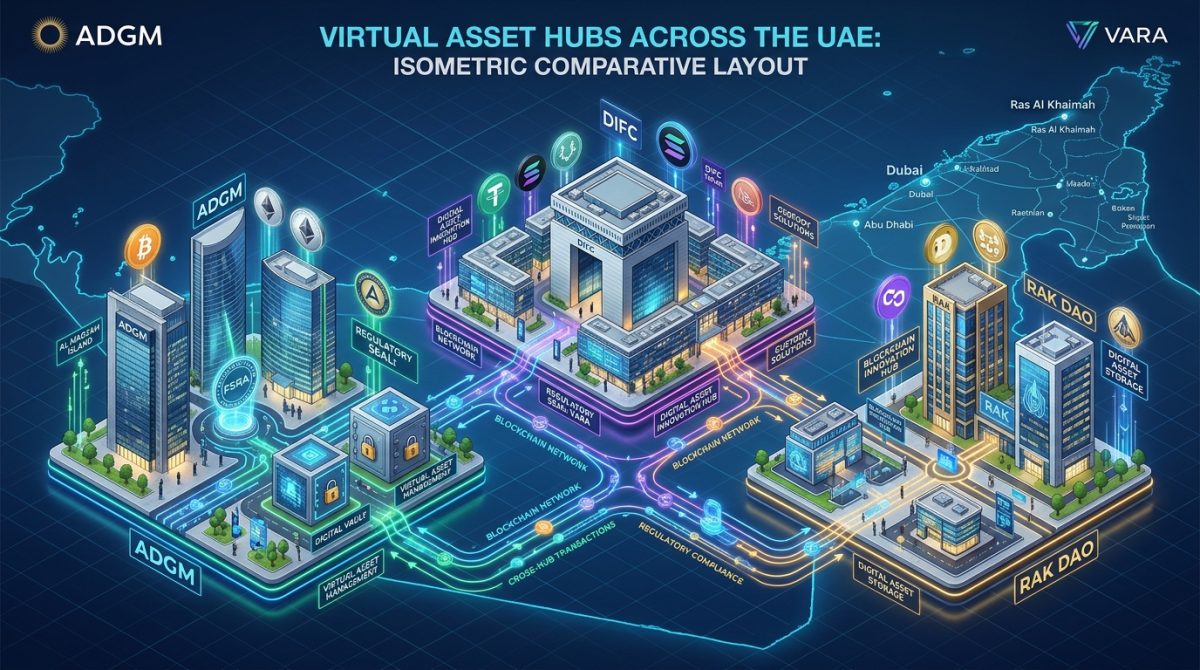
1. The Regulatory Ecosystem: VARA, DFSA, and FSRA

Understanding the UAE’s Web3 landscape requires navigating its distinct regulatory frameworks. Rather than imposing a single national mandate, the UAE features specialized regulators operating across mainland and free zone jurisdictions.
Virtual Assets Regulatory Authority (VARA) — Dubai Mainland & Non-Financial Free Zones
Established under Dubai Law No. 4 of 2022, VARA is the world’s first independent regulator dedicated exclusively to virtual assets. VARA governs all Virtual Asset Service Providers (VASPs) operating within Dubai mainland and its free zones, excluding the financial free zone of DIFC.
VARA’s regulatory framework covers seven distinct Virtual Asset activities:
-
Advisory Services: Provision of tailored financial or legal consultation regarding virtual assets.
-
Broker-Dealer Services: Facilitating buy/sell transactions between counterparties.
-
Custody Services: Secure safeguarding and management of client private keys or virtual assets.
-
Exchange Services: Operating centralized or order-matching trading platforms.
-
Lending & Borrowing Services: Managing credit facilities backed by digital assets.
-
Management & Investment Services: Discretionary or non-discretionary portfolio management.
-
Transfer & Settlement Services: Facilitating payments, settlements, and cross-border digital remittances.
VARA mandates strict compliance across Anti-Money Laundering (AML), Counter-Terrorism Financing (CTF), cybersecurity protocols, capital adequacy, and client asset segregation.
Dubai Financial Services Authority (DFSA) — Dubai International Financial Centre (DIFC)
The DIFC functions as an independent, common-law financial free zone governed by its own civil and commercial law system based on English law. Its financial regulator, the DFSA, enforces a sophisticated “Crypto Token” and “Investment Token” regime.
Under the DFSA framework, traditional financial instruments (stocks, bonds, debt securities) that are tokenized fall under the Investment Token regime. For public crypto assets, the DFSA maintains a strict recognition list (e.g., BTC, ETH, LTC, XRP, TON, USDC, EURC). Institutional asset managers and tokenization platforms operating out of DIFC benefit from the DFSA’s specialized Tokenization Sandbox, allowing firms to issue and trade tokenized real-world assets within a live, controlled market.
Financial Services Regulatory Authority (FSRA) — Abu Dhabi Global Market (ADGM)

Abu Dhabi’s international financial center, ADGM, was an early pioneer in digital asset regulation, establishing its Spot Crypto Asset Framework. Operating under English common law, the FSRA regulates spot crypto trading, digital security issuance, derivatives, and digital asset custody. ADGM is heavily favored by institutional funds, state-backed entities, and global market makers seeking deep liquidity pools and traditional investment fund integration.
2. In-Depth Analysis of Company Formation Across Key Free Zones
Selecting the correct corporate setup in the UAE is critical for operational success, tax planning, and licensing compliance. Below is a detailed standard comparison table outlining the key differences between the top jurisdictions.
| Feature / Metric | RAK DAO (Ras Al Khaimah) | DIFC (Dubai) | ADGM (Abu Dhabi) | DMCC (Dubai) |
| Primary Focus | Pure-play Web3, DAOs, AI, Gaming, NFTs | Institutional Finance, Tokenized Securities | Crypto Funds, Market Makers, Custodians | Advisory, Software Tooling, Crypto Mining |
| Legal Framework | Common Law Hybrid | English Common Law | English Common Law | UAE Federal / Civil Law |
| DAO Framework | Yes (DARe Framework) | No | No (Requires Foundation Structure) | No |
| Crypto Fee Payment | Native support for fees | USD / Fiat primary | USD / Fiat primary | Fiat primary |
| Primary Regulator | RAK DAO Authority | DFSA | FSRA | VARA (for VASPs) / DMCC Authority |
| Est. Cost (Year 1) | $1,800 – $9,500 | $100,000 – $250,000+ | $150,000 – $350,000+ | $20,000 – $110,000 |
| Foreign Ownership | 100% | 100% | 100% | 100% |
RAK Digital Assets Oasis (RAK DAO): The Specialized Web3 Ecosystem
Located in Ras Al Khaimah, RAK DAO is the world’s first dedicated, non-financial free zone created specifically for digital asset companies, artificial intelligence firms, and Web3 protocol developers.
-
DAO Legal Recognition (DARe Framework): RAK DAO introduced the Decentralized Autonomous Organization Regime (DARe), giving legal personality and limited liability protections to DAOs without forcing them to adopt legacy corporate vehicles.
-
Startup DAO Tier: Designed for early-stage communities with under 100 members and treasuries under $1,000,000.
-
Alpha DAO Tier: Tailored for mature protocols executing public token distribution and managing larger treasury reserves.
-
-
Flexible Licensing Models: Offers over 170 tailored business activities, including decentralized application (dApp) development, blockchain infrastructure, metaverse design, and Web3 gaming hubs.
-
Banking & On-Ramps: Maintains direct partnerships with regional digital-friendly banks (such as RAKBANK) to streamline corporate fiat account opening and allows crypto payments for government fees.
Dubai International Financial Centre (DIFC)
DIFC serves as the institutional gateway for digital assets. It is ideal for sovereign funds, major fintech enterprises, and asset management platforms looking to tokenize traditional portfolios.
-
Institutional Credibility: DIFC hosts major financial giants, providing an unmatched ecosystem for tokenizing private equity, private credit, and real estate investment trusts (REITs).
-
Coded Contracts: DIFC’s Contract Law codified smart contracts, recognizing software code as legally binding contracts under English common law principles.
-
Tokenization Sandbox: Enables financial institutions to test asset tokenization pipelines in a regulatory sandbox environment with direct access to accredited investors.
Abu Dhabi Global Market (ADGM)
ADGM is Abu Dhabi’s flagship international financial center. It is highly attractive for institutional funds and digital asset custody operators due to its comprehensive regulatory coverage under the FSRA.
-
SPV & Foundation Structures: Offers legal vehicles for holding IP, token treasuries, and real-world assets.
-
Institutional Liquidity: Preferred location for market makers, algorithmic trading desks, and institutional-grade custodians.
DMCC & Dubai Mainland VARA Pathway
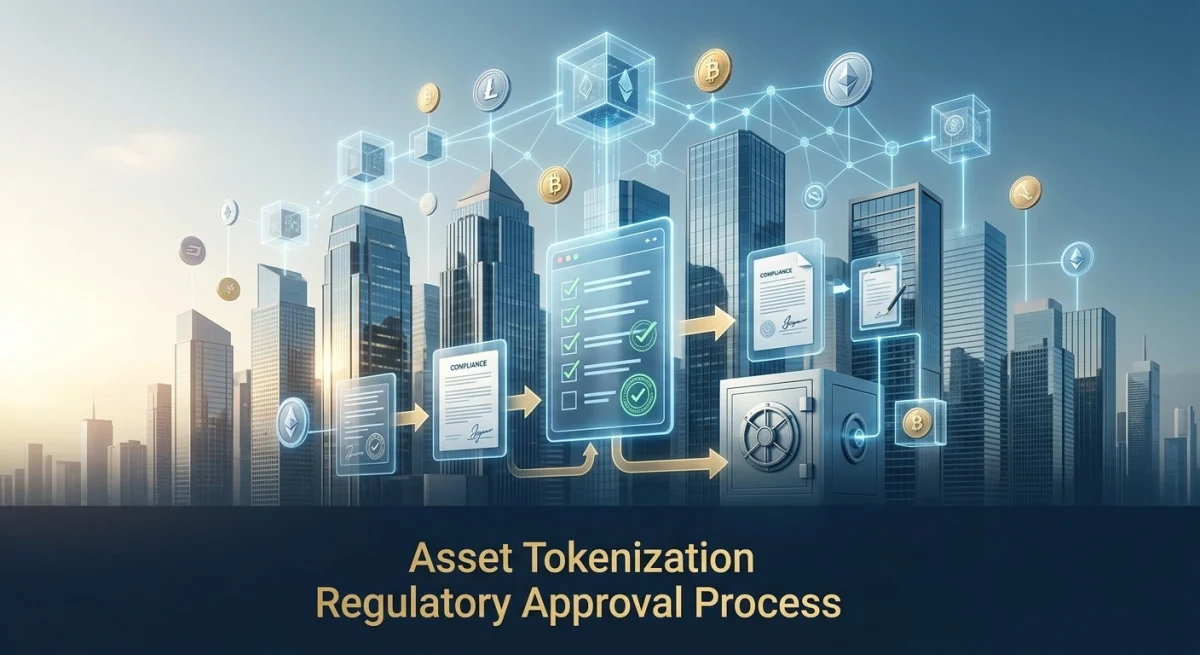
For startups establishing operations directly in Dubai, Dubai Multi Commodities Centre (DMCC) provides a cost-effective free zone base. However, if the business involves crypto trading, custody, exchange, or advisory services, the company must undergo VARA’s multi-stage licensing process:
-
Category & Structure Selection: Aligning proposed business activities with VARA’s exact activity definitions.
-
Initial Approval (IA): Submitting business plans, architecture diagrams, tokenomics whitepapers, and shareholder background checks.
-
In-Principle Approval (IPA): Securing temporary clearance while building out physical office presence, hiring required resident officers, and setting up compliance infrastructure.
-
VASP Operating License: Final audit approval following fulfillment of minimum paid-up capital requirements and live penetration testing.
3. Tokenization Across Key Sectors: RWA Implementation
Real-World Asset (RWA) tokenization is transforming traditional capital markets across the Middle East. By converting rights to physical or financial assets into digital tokens on a blockchain ledger, enterprises unlock liquidity, fractional ownership, automated settlement, and global borderless investment flows.
Real Estate Tokenization
The UAE property market—led by Dubai and Abu Dhabi—has emerged as a global testbed for fractionalized real estate tokenization.
-
The Mechanism: High-value residential or commercial assets are acquired by a Special Purpose Vehicle (SPV) incorporated in a recognized common-law free zone like DIFC or ADGM. The equity or debt yield of the SPV is subsequently tokenized on a permissioned or public EVM-compatible blockchain.
-
Benefits: Fractionalization reduces entry barriers for international retail investors from $500,000+ down to $100. Smart contracts automate monthly rental yield distributions directly to investor non-custodial or custodial wallets in stablecoins (USDC/USDT).
-
Regulatory Compliance: Real estate tokens fall under regulatory oversight (VARA or DFSA), ensuring mandatory Know Your Customer (KYC) and Anti-Money Laundering (AML) checks embedded directly into the token smart contract standard (e.g., ERC-3643 or permissioned ERC-20).
Supply Chain, Logistics, and Industrial Assets
As a global trade nexus connecting Europe, Asia, and Africa, the UAE heavily utilizes tokenization to optimize international trade finance and logistics tracking.
-
Logistics Tracking & Proof of Provenance: Shipping documents, Bills of Lading (BoL), and cargo manifests are recorded immutably on distributed ledgers. This eliminates document fraud and reduces settlement delays at ports such as Jebel Ali.
-
Trade Finance Liquidity: SMEs across the UAE frequently face working capital gaps while waiting for 90-day invoice clearances. Tokenization enables enterprises to tokenize verified invoice receivables and sell them on decentralized credit marketplaces, unlocking instant liquidity from global investors.
-
Heavy Machinery and Equipment: Industrial conglomerates fractionally tokenize high-value equipment assets, enabling shared usage models and automated pay-per-use micropayments executed via IoT sensors and smart contracts.
Web3 Gaming, Entertainment, and Media
The UAE’s strategic focus on the creative economy has driven adoption in Web3 gaming, digital identity, and intellectual property tokenization.
-
In-Game Economies and Utility Tokens: Gaming studios based in RAK DAO and DMCC build open-economy video games where in-game assets (skins, land, items) exist as interoperable non-fungible tokens (NFTs).
-
IP and Royalty Tokenization: Music labels, film studios, and digital artists utilize smart contracts to fractionalize copyright revenues. Royalty distributions are triggered automatically whenever media content is streamed, downloaded, or resold on digital marketplaces.
-
Ticketing & Fan Engagement: Event organizers across Dubai replace legacy ticketing systems with NFT-based digital passes. This eliminates secondary market scalping, guarantees ticket authenticity, and allows event hosts to earn automated perpetual secondary royalties.
4. Infrastructure, Technical Layer, and Ecosystem Growth
A successful Web3 ecosystem requires hardware, network infrastructure, and enterprise software capabilities. The UAE has invested heavily across all three domains.
5G, Telecommunications, and High-Throughput Computing
The UAE consistently ranks among the global leaders in mobile internet speeds and 5G deployment. State-backed telecommunications giants like e& (formerly Etisalat) and du have launched enterprise blockchain initiatives, providing node-as-a-service infrastructure, private consortium deployment, and edge computing networks necessary to run high-throughput validator nodes for networks like Ethereum, Solana, and Layer-2 rollups.
Central Bank Digital Currency (CBDC) & Digital Dirham
The Central Bank of the UAE (CBUAE) launched its digital currency strategy, the “Digital Dirham.” This initiative aims to modernize both domestic retail transactions and cross-border wholesale settlements.
-
Project mBridge: The CBUAE is a key participant in Project mBridge—a multi-CBDC platform built for international trade settlement. This initiative enables instant, real-time, peer-to-peer cross-border foreign exchange transactions using central bank money, reducing reliance on legacy correspondent banking rails.
Institutional Banking On-Ramps and Corporate Integration
Historically, fiat-to-crypto banking was a major obstacle for Web3 companies globally. The UAE has addressed this challenge by establishing clear compliance protocols:
-
Specialized digital-first banks and progressive traditional institutions (e.g., RAKBANK, Mashreq, Wio Bank) offer corporate bank accounts to licensed virtual asset firms.
-
Automated compliance suites integrate directly with chain analytics platforms (e.g., Chainalysis, Elliptic), ensuring that incoming fiat and cryptographic transfers undergo continuous transaction monitoring.
5. Tax, Substance, and Compliance Protocols for 2026
While the UAE remains one of the world’s most tax-advantaged business environments, Web3 founders must adhere to strict international compliance standards.
Corporate Tax Framework
-
Standard Rate: A 9% federal corporate tax applies to net business profits exceeding AED 375,000 (~USD 102,000).
-
Qualifying Free Zone Persons (QFZP): Web3 companies operating inside designated free zones (such as DIFC or ADGM) may qualify for a 0% corporate tax rate on qualifying income, provided they maintain adequate economic substance and do not engage in non-qualifying mainland UAE commercial transactions.
-
Individual Taxation: The UAE charges 0% personal income tax, 0% capital gains tax, and 0% withholding tax on individual crypto holdings and personal trading profits.
Economic Substance Regulations (ESR)
To comply with OECD and global tax transparency guidelines, licensed Web3 entities in the UAE must demonstrate real economic substance within the country. This requires:
-
Maintaining a physical commercial office space (flexi-desks may be restricted depending on license type).
-
Employing resident, qualified full-time staff (including key officers such as a Money Laundering Reporting Officer [MLRO] and Compliance Officer).
-
Demonstrating that core income-generating activities and strategic board decisions take place physically within the UAE.
Anti-Money Laundering (AML) and Travel Rule Compliance
VARA, DFSA, and FSRA enforce strict compliance with the Financial Action Task Force (FATF) guidelines. VASPs must implement automated travel-rule solutions to transmit originator and beneficiary information alongside virtual asset transactions exceeding standard regulatory thresholds.
Conclusion
The United Arab Emirates has successfully established itself as the global capital for Web3 innovation, decentralized technology, and asset tokenization. By replacing ambiguous legal stances with clear, specialized regulatory frameworks through VARA, DFSA, and FSRA, the UAE provides founders, institutional investors, and global enterprises with an unmatched operational environment.
Whether fractionally tokenizing prime real estate in Dubai, establishing a legally protected DAO in RAK DAO, or building institutional digital security funds in DIFC, the opportunities across the Emirates are vast. As global adoption of tokenized real-world assets continues to accelerate, setting up a compliant, structurally sound Web3 entity in the UAE offers a strategic advantage for companies aiming to shape the future of global digital finance.
6. Frequently Asked Questions (FAQs)
What is Real-World Asset (RWA) tokenization in the UAE?
Real-World Asset tokenization involves converting physical or financial assets—such as real estate, private credit, artwork, or commodities—into digital cryptographic tokens hosted on a blockchain network. In the UAE, these tokens operate within established legal and regulatory frameworks (such as VARA, DFSA, or FSRA), ensuring legally binding investor rights, automated rental yield payments, and secondary market liquidity.
Can foreign investors set up 100% owned Web3 companies in the UAE?
Yes. All major Web3 jurisdictions in the UAE—including RAK DAO, DIFC, ADGM, and DMCC—allow 100% foreign ownership. Founders do not need a local UAE partner or sponsor to hold shares in their Web3 company.
Which UAE jurisdiction is best for my Web3 or Tokenization project?
-
RAK DAO: Ideal for early-stage Web3 startups, software developers, gaming hubs, AI protocols, and DAOs looking for cost-effective setup and bespoke digital asset regulations.
-
DIFC / ADGM: Best suited for institutional asset managers, digital security platforms, tokenized fund structures, and institutional custodians operating under English common law.
-
DMCC / Dubai Mainland (VARA): Best for retail-facing crypto exchanges, brokers, token issuers, and crypto advisory platforms catering directly to the broader Dubai and UAE markets.
How does the UAE tax tokenized assets and crypto earnings?
The UAE maintains a highly attractive tax climate. There is a 0% personal income tax and 0% capital gains tax on individual crypto holdings and transactions. For corporations, a 9% corporate tax applies to net profits above AED 375,000, but entities registered as Qualifying Free Zone Persons (QFZP) within financial free zones like DIFC and ADGM can enjoy a 0% corporate tax rate on qualifying income.
How can specialized advisories like Tokenova assist in Web3 setup?
Navigating complex multi-jurisdictional frameworks, securing VASP approvals, and designing token economics require specialized legal and financial guidance. Specialized Web3 consultancy firms like Tokenova bridge the gap between blockchain innovation and regulatory compliance. Tokenova provides end-to-end support—from selecting the optimal free zone (RAK DAO, DIFC, ADGM, VARA) and structuring SPVs to smart contract audits, whitepaper development, and corporate banking integration.