
The real guide to getting a tokenized asset past compliance, past confusion, and into the market
There is a glamorous version of tokenization.
It lives in pitch decks. It glows in neon. It promises fractional ownership, 24/7 markets, programmable value, and a future where every asset gets a digital twin and a better haircut.
Then there is the real version.
The real version has licensing forms, regulator meetings, custody diagrams, AML controls, governance checks, legal opinions, disclosure drafts, and at least one moment where someone in the room says, “Wait, is this a security?”
That second version is the one that gets approved.
And in 2026, that matters more than ever. Global regulators are making the same point in slightly different accents: tokenization may change the rails, but it does not erase the rules. In the UAE, that message shows up across the federal framework, SCA guidance, ADGM licensing expectations, and DIFC sandbox activity. In the US, the SEC said in January 2026 that tokenized securities are still securities, and that structure matters a lot.
The fast answer
If you want the short, high-value answer for board meetings, or that one founder who only reads bold text, here it is:
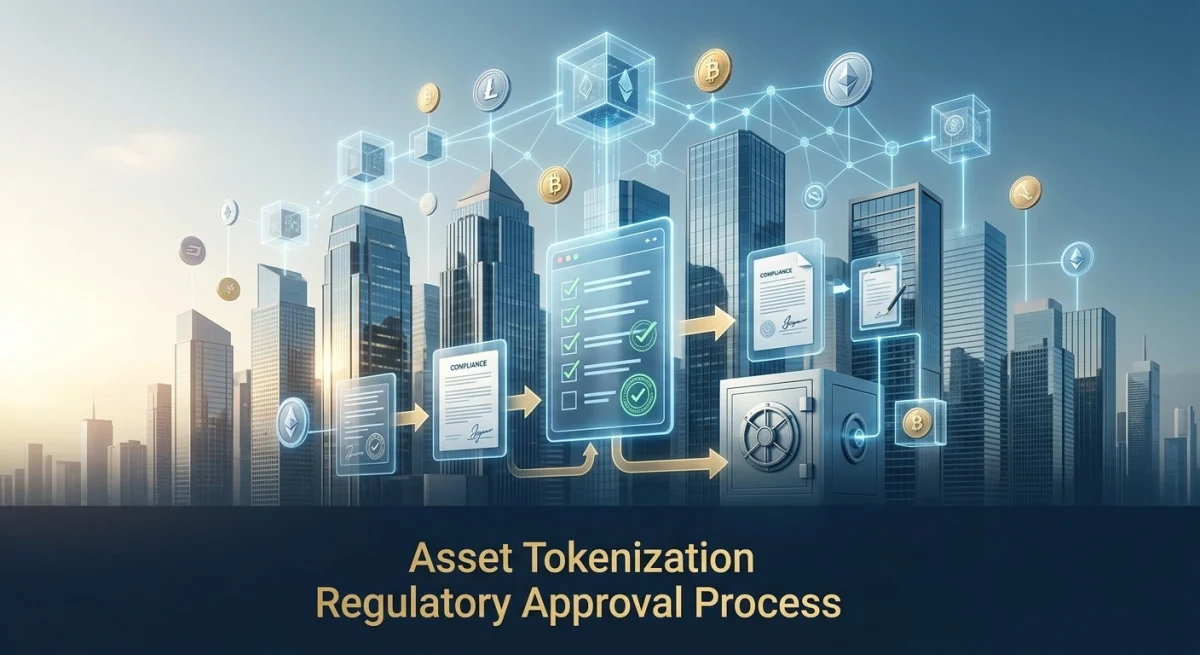
The asset tokenization regulatory approval process usually has five real steps:
- Classify the asset correctly
- Choose the right jurisdiction before launch
- Engage the regulator early
- Submit a formal application with a full control stack
- Pass launch testing and ongoing supervision
That is not theory. ADGM explicitly describes a five-stage process that runs from regulator discussions to formal application, in-principle approval, final approval, and operational launch testing. SCA’s guidance also lays out a five-stage path built around due diligence, official submission, initial approval, licensing, and fees.
First truth: tokenization is not a legal shortcut in a fancy jacket

Let’s kill the biggest myth early.
Tokenization is not a way to smuggle a regulated product through an unregulated side door. It is usually a way to repackage an already regulated product using a different infrastructure. The UAE federal framework defines virtual assets broadly, but it also says the regime does not apply to regulating virtual assets inside financial free zones, and it excludes digital securities and certain payment-related assets from this resolution’s scope. That is a polite regulatory way of saying: classify first, market later.
The SEC made the same point even more clearly in January 2026. It said a tokenized security is still a security, and noted that tokenized securities generally fall into two categories: issuer-sponsored tokenized securities and securities tokenized by unaffiliated third parties. That distinction is not cosmetic. It changes disclosure, recordkeeping, transfer logic, custody, and who gets a regulator’s eyebrow raised first.
So the first job is not “mint the token.”
The first job is “say exactly what the token is.”
Step 1: Decide what your token actually represents
This sounds basic. It is not.
A token can represent ownership in the underlying asset. It can represent a contractual claim on that asset. It can represent access rights. It can represent exposure that behaves more like a wrapper than the real thing. Regulators care deeply about that difference because rights, liabilities, investor protections, and transfer restrictions all sit inside that answer.
If your tokenized product walks like a security, pays like a security, and is marketed like a security, calling it “just infrastructure” is not brave. It is expensive.
This is where strong projects separate themselves from noisy ones. Serious teams write a rights map before they write a campaign. They define:
- what the holder owns
- what the holder can transfer
- who maintains the official record
- what happens in insolvency
- how redemptions, dividends, voting, or profit claims work
In other words, they do not just tokenize the asset. They tokenize the legal reality.
Step 2: Choose the jurisdiction before you choose the landing page
A lot of tokenization projects build the brand first and the regulatory map second.
That is like choosing wall paint before checking if the building has foundations.
In the UAE, where you operate changes everything. Cabinet Resolution No. 111 of 2022 applies to the virtual asset sector across the UAE, including free zones, but it explicitly excludes financial free zones from its scope. It also excludes digital securities from that resolution. That means the regulatory path for a tokenized asset depends not just on what you issue, but where you issue it and under which rulebook.
That is why “UAE strategy” is never one sentence. It is usually a map with arrows.
On one side, you have the federal and onshore logic. On another, you have ADGM’s licensing framework. Then you have DIFC, where the DFSA has been actively leaning into tokenization through its sandbox and related framework work. In June 2025, the DFSA began engagement with firms selected for its Tokenisation Regulatory Sandbox after receiving 96 expressions of interest from firms across the UAE, UK, EU, Canada, Singapore, and Hong Kong. Those proposals covered tokenized bonds, sukuk, funds, trading models, and custody.
That is not a market flirting with tokenization. That is a market interviewing it seriously.
Step 3: Regulator engagement starts before the paperwork
Here is a sentence more founders need to hear:
The application process starts before the application.
ADGM says applicants should be prepared to engage heavily with the FSRA throughout the application process. Its guidance lays out five stages and starts with due diligence and discussions with the regulator before formal submission. It also expects a detailed launch plan as part of the formal application.
SCA’s guidance says almost the same thing in its own language. Applicants are expected to engage with SCA, explain the proposed business model clearly, show how they meet applicable requirements, and often make in-depth technical presentations before they submit the formal application. Then the process moves into official submission, initial approval, licensing, and fees.
This matters because regulators are not only reviewing your product. They are reviewing your maturity.
They want to know:
- whether your leadership understands the risks
- whether your custody model makes operational sense
whether your controls are real or just decorative - whether your compliance team is a function or a costume
Tokenization is exciting. Regulators know that. Their job is to find out whether you are still excited after page 87 of the controls pack.
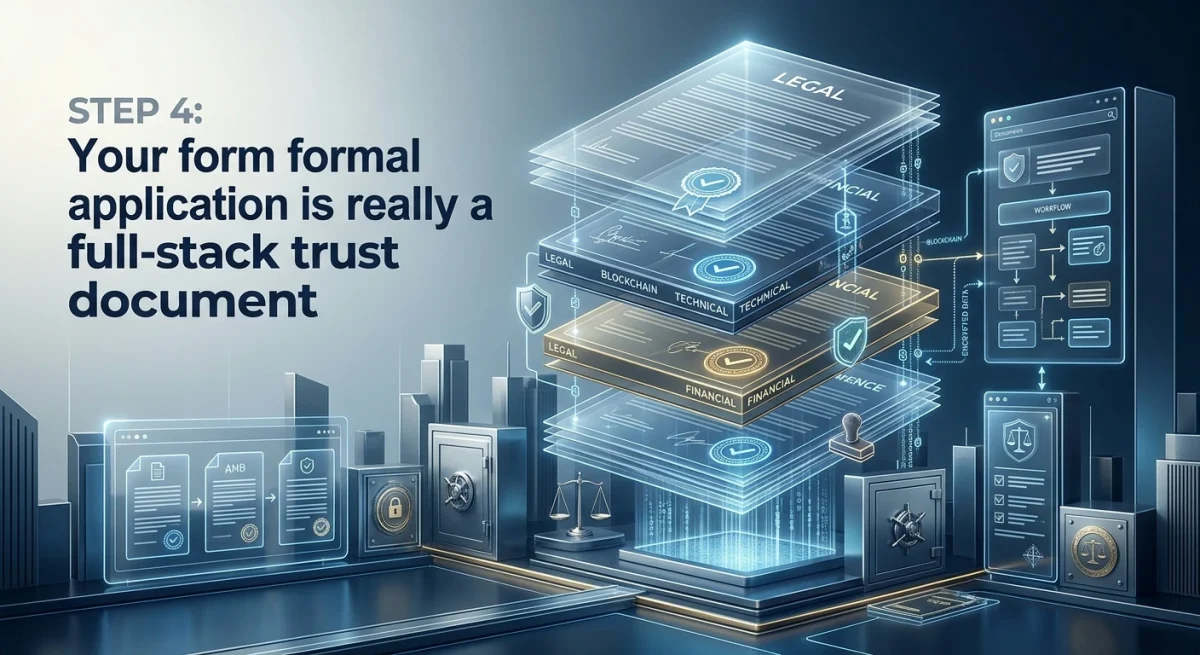
Step 4: Your formal application is really a full-stack trust document
A weak tokenization application usually has one big flaw.
It thinks the asset is the star.
In reality, the star is the control environment.
ADGM’s guidance says the formal review includes the application, supporting documents, and a detailed launch plan. Final approval may also depend on operational testing and, where applicable, third-party verification of systems.
SCA’s guidance takes a similarly serious approach. It frames licensing around core modules that include general provisions, accreditation and licensing, business conduct, capital adequacy, and AML/CFT. It also advises applicants to consider appointing compliance consultants to support them through the application process.
So what usually has to be ready?
At minimum:
- a clear business model narrative
- legal classification and token rights memo
- governance structure and key personnel plan
- AML and sanctions controls
- custody and key management policies
- smart contract and systems assurance
- disclosure documents
- launch plan and testing plan
- outsourcing and vendor oversight framework
This is the unsexy part of tokenization. It is also the part that gets institutions comfortable enough to pick up the phone.
Step 5: Approval is not the finish line. It is the supervised beginning
One of the most useful phrases in ADGM’s guidance is “operational launch testing.”
That phrase should be on a framed poster in every tokenization startup office.
Why? Because it captures the truth regulators are now applying across markets: getting permission is not the same as proving you can operate safely. ADGM says applicants only progress to launch when operational testing is completed to the FSRA’s satisfaction, including third-party system verification where applicable. It also makes clear that authorized persons should expect close supervision after licensing.
SCA says much the same thing. Its guidance notes that licenses may be conditional on further operational capabilities, testing, and third-party verification. Licensed bodies should also expect ongoing assessments and reviews.
That means your launch checklist should include:
- incident response playbooks
- access control and key recovery
- transfer restriction logic
- audit trails
- reconciliation between onchain and offchain records
- ongoing compliance monitoring
- investor communications discipline
In plain English: regulators do not want your tokenization story. They want your tokenization operating system.
The mistakes that quietly wreck approvals
Let’s save you a few months.
1. Building distribution before classification
If the website promises liquidity, transfers, yield, and fractional access before the legal model is settled, you are creating future pain with present confidence.
2. Treating custody like a technical footnote
Custody is not a footnote. It is one of the first places regulators and institutional partners look for real operational risk.
3. Confusing a sandbox with a shortcut
A sandbox is a controlled path to test a serious model. It is not a magic portal to skip hard questions. The DFSA’s sandbox interest came from firms proposing tokenized bonds, sukuk, funds, custody, and trading models. In other words, grown-up products with grown-up obligations.
4. Thinking “Web3-native” is enough
Sometimes it is. Often it is not. The projects that get traction with regulators usually look less like crypto experiments and more like disciplined financial infrastructure with better plumbing.
Why this matters now
Because the market has changed.
The conversation is no longer “will tokenization matter?” The conversation is now “which teams can package it in a way that regulators, institutions, and real buyers can trust?”
In the Gulf, that shift is visible. Dubai Land Department launched the pilot phase of its real estate tokenisation project in March 2025, in collaboration with VARA and Dubai Future Foundation, and said the initiative would put tokenization onto property title deeds. It even projected the market could reach AED 60 billion by 2033.
That is not a signal that everything is easy.
It is a signal that the window has moved from theory to execution.
And execution, inconveniently and beautifully, is where the regulatory approval process lives.
The part where compliance becomes a competitive advantage
The smartest tokenization teams in 2026 are not the ones shouting “future” the loudest.
They are the ones making regulators feel calm.
That is a real superpower.
Because when your token model is clear, your control stack is boring in the best possible way, and your launch plan reads like a serious financial product instead of a hopeful experiment, approval stops feeling like a wall.
It starts feeling like a moat.
And in a market that increasingly rewards trust, that moat may be the most valuable asset you tokenize.
FAQ
What is the asset tokenization regulatory approval process?
It is the process of getting both the business model and the tokenized product accepted under the relevant regulatory framework. In practice, that means classification, jurisdiction selection, regulator engagement, formal application, launch testing, and ongoing supervision.
Are tokenized assets automatically regulated like securities?
Not always, but many are. Regulators look at the rights and economic reality of the product, not just the technology wrapper. The SEC’s January 2026 statement makes that very clear for tokenized securities.
How long does tokenization approval take?
Public guidance is structured more around stages than hard deadlines, so the honest answer is usually “quarters, not weeks.” ADGM and SCA both describe staged processes with heavy engagement, formal review, approvals, and testing.
What slows approvals the most?
Weak classification, messy custody design, shallow AML controls, weak governance, and applications that read like marketing instead of risk management.