
The banking world is changing fast, and if you’re in compliance or risk management, you’ve probably noticed. Basel III blockchain compliance banking isn’t just another regulatory hurdle. It’s reshaping how financial institutions handle digital assets.
Here’s the deal: The Basel Committee on Banking Supervision has finalized a cryptoasset framework that became effective on January 1, 2026. That means banks have had roughly a year to get their house in order since the final revisions were agreed upon. What’s catching everyone off guard is how banks must now classify cryptoassets into specific groups, each with wildly different capital requirements. Some crypto holdings will force banks to hold capital equal to 100% of the exposure value. That’s not a typo. We’re talking about a complete shift from traditional banking math.
Don’t panic, though. We’ll walk you through exactly what you need to know to navigate these new requirements successfully.
Understanding Basel III Requirements for Blockchain Banking
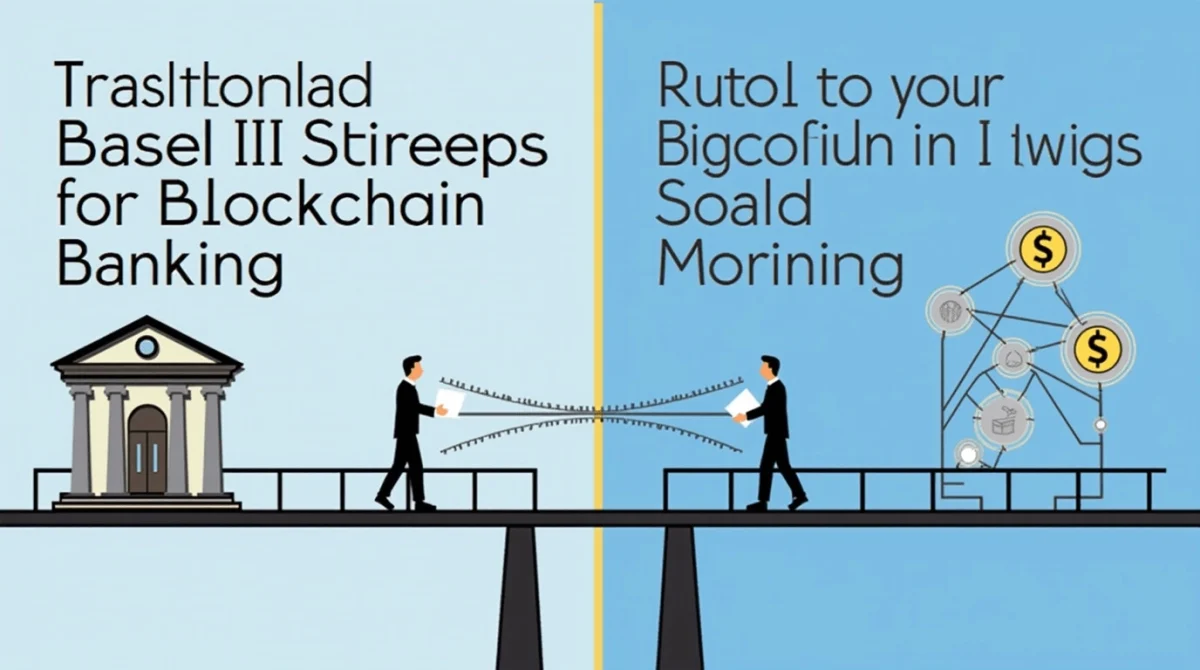
Let’s start with the basics. Basel III emerged from the 2007–2008 financial crisis to make banks stronger and more resilient. Now it’s tackling the digital asset revolution head-on.
The Basel III framework introduces stricter capital requirements, liquidity ratios, and leverage limits for banks. But here’s where it gets interesting for your blockchain operations: the Basel Committee created entirely new rules specifically for cryptoasset exposures. Traditional banking regulations weren’t built for assets that live on blockchain networks. You can’t exactly apply century-old banking rules to Bitcoin trading or tokenized bonds.
The Basel III blockchain compliance framework hits three major areas:
- Capital adequacy: How much capital you need to hold against crypto exposures.
- Risk management: Operational and infrastructure risks unique to blockchain.
- Supervision: Enhanced oversight of your digital asset activities by regulators.
What Makes Blockchain Banking So Different?
Your traditional bank deals with familiar stuff like loans, corporate bonds, and customer deposits. Blockchain banking, however, introduces entirely new risk categories.
Take operational risks for example. When you hold tokenized securities, you’re facing technology infrastructure risks that don’t exist with paper certificates. Smart contract bugs, blockchain network failures, lost private keys. Any of these can wipe out value instantly.
Then there’s settlement finality. In traditional banking, settlement happens through established clearing systems that regulators understand. Blockchain settlements are irreversible but depend on network consensus mechanisms that supervisors are still figuring out.
And don’t forget market liquidity. A tokenized bond might trade very differently from its traditional counterpart, even if they represent the same asset. This creates basis risk that regulators want you to manage carefully.
The bottom line? If you’re planning to dive into blockchain banking, understand that these risks aren’t just add-ons to your existing framework. They’re fundamentally different challenges that require new approaches.
Regulatory Complexity You Need to Navigate
Here’s what’s making compliance officers lose sleep: the Basel III blockchain rules don’t just tweak existing requirements. They create parallel frameworks that interact with traditional banking rules in complex ways.
For instance, if you hold a tokenized U.S. Treasury bond, you need to assess whether it qualifies for the same risk weighting as the paper version. Sounds simple, until you realize the assessment involves legal enforceability across jurisdictions, settlement finality on blockchain networks, and infrastructure risk evaluations.
Many banks are discovering they need entirely new compliance capabilities to handle these assessments properly. Existing risk models and legal frameworks often don’t cover the quirks of digital assets.
Cryptoasset Classification Framework Under Basel III
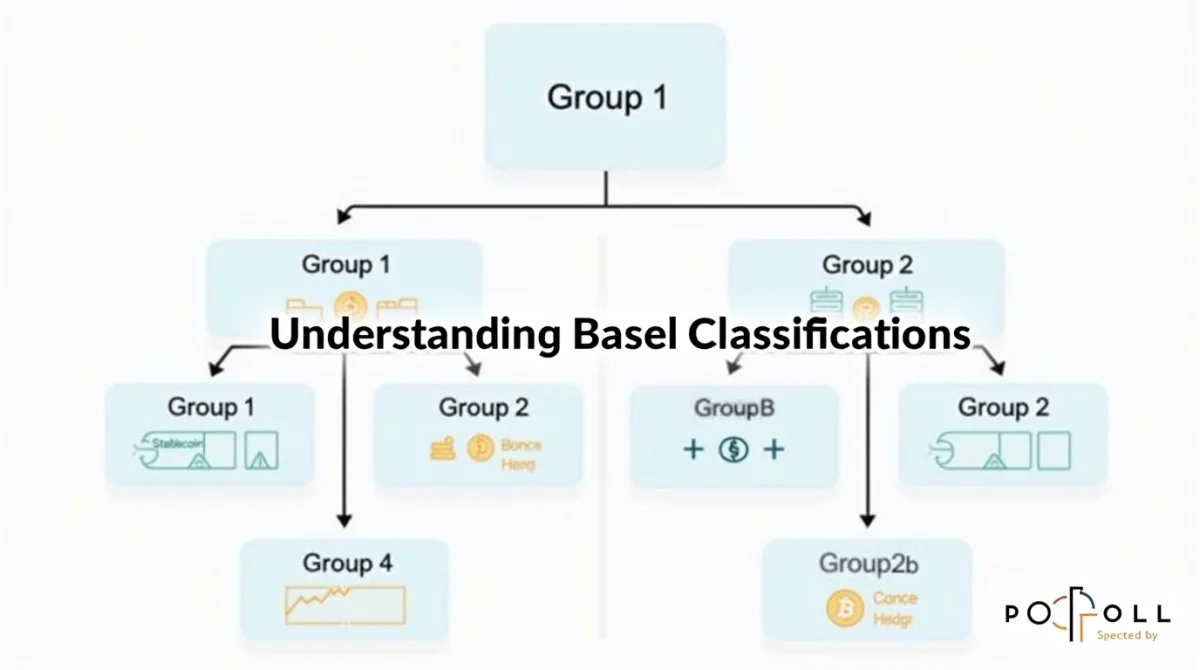
Alright, here’s where Basel III gets specific about your blockchain compliance obligations. The framework divides all cryptoassets into two main groups (with a couple of sub-groups) that you need to understand:
Group 1: The “Favored” Cryptoassets – These are cryptoassets that get relatively lenient treatment.
- Group 1a: Tokenized Traditional Assets. These are digital versions of financial instruments you already know, such as government bonds, corporate stocks, or even bank deposits on blockchain networks. The key requirement is that they must pose the same level of risk as their non-tokenized versions. In other words, no additional counterparty risks or hoops to jump through to access your legal rights. The catch is proving “the same level of risk” is harder than it sounds. You have to show that market liquidity, settlement processes, and legal enforceability match the traditional asset exactly.
- Group 1b: Qualifying Stablecoins. Stablecoins that meet very strict criteria can receive favorable treatment, but the bar is incredibly high. Qualifying stablecoins must:
- Be backed by high-quality reserve assets.
- Pass rigorous redemption risk tests.
- Have transparent governance frameworks.
- Be issued by regulated entities with capital and liquidity requirements.
- Most stablecoins in the market today won’t qualify under these rules. Even popular ones like USDT or USDC face challenges meeting all of the Basel III criteria.
Group 2: The “Penalty Box” Cryptoassets – This category includes most cryptocurrencies you’ve heard of: Bitcoin, Ethereum, and other unbacked digital assets.
- Group 2a: Cryptoassets that meet specific hedging criteria (they still face heavy restrictions, but banks get a bit of recognition for risk mitigation if they hedge these exposures).
- Group 2b: All other cryptoassets that don’t qualify anywhere else.
The consequences of being in Group 2b are severe. These assets get a 1,250% risk weight under Basel III. In plain English, that means you need capital equal to 100% of the exposure value at a minimum. If you hold $10 million in Bitcoin, you’ll need about $10 million in regulatory capital backing that position. That is a punishing requirement that makes traditional crypto trading uneconomical for most banks.
Real-World Classification Examples
Let’s make this concrete with a few examples:
- A tokenized U.S. Treasury bond issued on Ethereum could potentially qualify as Group 1a. But that’s only if it truly maintains the same legal rights as the physical bond and doesn’t introduce extra risks through its blockchain implementation. That’s a big “if.”
- Circle’s USDC stablecoin might qualify as Group 1b if it meets all the reserve asset and regulatory standards. Even well-regarded stablecoins struggle to check every box in the Basel rules, so this is not guaranteed.
- Your Bitcoin holdings will definitely land in Group 2b. As noted, that would require substantial capital reserves and could make holding large Bitcoin positions impractical for a bank.
What does this mean in practice? If you hold $10 million in Bitcoin, you’ll need roughly $10 million in capital set aside to cover that risk. Clearly, that’s not a business model most banks can sustain.
Capital Requirements and Risk Management
Capital requirements under Basel III blockchain compliance get complicated fast. They’re more complex than traditional banking rules because you’re dealing with multiple layers of risk for digital assets.
Group 1 Capital Treatment
For Group 1a tokenized assets, you generally apply the same risk weights as their traditional equivalents. A tokenized corporate bond is treated like a regular corporate bond in terms of capital. However, there’s a potential trap: you have to separately assess whether a tokenized asset is eligible for credit risk mitigation (like being used as collateral). If a tokenized asset has lower market liquidity than its traditional version, you might not be able to count it as eligible collateral. Think about it: if you can’t liquidate a tokenized bond as quickly as a traditional one during market stress, it shouldn’t qualify as collateral even if everything else is identical.
For Group 1b stablecoins, the calculation gets messy because you’re exposed to multiple risks at once:
- Credit risk to the stablecoin issuer (will the issuer honor redemptions?).
- Market risk from the reserve assets backing the stablecoin.
- Counterparty risk from any intermediaries involved in redemption or custody.
- Infrastructure risk from the blockchain network itself.
In short, even the “favored” stablecoins come with a lot of baggage that banks must account for.
Group 2 Capital Requirements
This is where Basel III really shows its teeth. Group 2b cryptoassets face that 1,250% risk weight we mentioned earlier. Here’s the math:
If you hold $10 million in Bitcoin, you need to maintain about $10 million in capital against that exposure (because an 8% minimum capital ratio × 1,250% risk weight ≈ 100% of exposure). The impact is intentionally harsh. Banking regulators want to severely limit speculative crypto trading, while still allowing regulated institutions to explore blockchain tech in a more controlled way.
Infrastructure Risk Add-Ons
Beyond these base capital rules, supervisors can impose extra capital requirements if they see weaknesses in your blockchain infrastructure. Unlike traditional financial systems, blockchain networks have unique risks that regulators are still learning to assess. For example:
- Consensus mechanism failures (what if the blockchain network itself stops confirming transactions?).
- Smart contract vulnerabilities in the protocols you’re using.
- Validator or miner centralization that could undermine the network’s security.
- Network governance disputes or forks that could affect asset stability.
Supervisors will start by assuming no additional capital add-on, but they have the authority to increase requirements if they aren’t comfortable with the tech risks. This gives regulators a lot of discretionary power over your blockchain banking activities.
Exposure Limits that Bite
Basel III also slaps strict limits on how much Group 2 crypto exposure a bank can have:
- 1% of Tier 1 capital: This is the recommended maximum exposure to Group 2 cryptoassets (like Bitcoin and other unbacked crypto).
- 2% of Tier 1 capital: This is an absolute ceiling.
If you go above 1%, tougher capital requirements kick in for the amount over that threshold. And if you breach the 2% limit, then all of your Group 2 holdings get hit with the strictest (Group 2b) capital treatment. In other words, regulators really don’t want banks to bet the farm on crypto. For most banks, these limits effectively cap any meaningful cryptocurrency exposure. It’s hard to build a big crypto business line if you’re limited to such a small slice of your capital.
Implementation Timeline and Compliance Strategies
The Basel III cryptoasset framework became effective on January 1, 2026, which gave banks roughly one extra year (after an initial 2025 target) to prepare their compliance infrastructure. That might sound like plenty of time, but the operational changes required are substantial.
Immediate Steps to Take
First, establish your asset classification process now. You need robust procedures to evaluate which cryptoassets qualify for Group 1 treatment and which fall into Group 2. And this isn’t a one-and-done exercise. You must monitor classifications continuously as market conditions and asset features change. A stablecoin that qualifies today might lose its status if, say, the issuer changes its reserve composition or governance structure.
Also, set up notification procedures with your regulators. Banks are expected to inform supervisors about their cryptoasset classification decisions ahead of time. This gives regulators a chance to review and potentially challenge your assessment before you load up on a questionable asset.
Building Your Compliance Infrastructure
Your risk management systems might need major upgrades to handle blockchain-specific risks. Traditional banking systems aren’t designed to monitor things like smart contract risk or blockchain network health. Consider some operational capabilities you’ll likely need:
- Real-time blockchain monitoring tools (to watch transactions and network status).
- Institutional-grade cryptoasset custody solutions (to securely store private keys and digital assets).
- Settlement finality verification systems (to confirm that blockchain transactions are truly irreversible and settled).
- Reserve asset monitoring for any stablecoins you deal with (to ensure those coins remain fully backed and redeemable).
Many banks are finding that they need entirely new tech stacks to meet these requirements effectively. It’s not cheap, but it’s necessary for compliance and for taking advantage of blockchain opportunities.
Managing Regulatory Relationships
Expect banking supervisors to take an active role in overseeing your crypto activities. The Basel framework actually gives regulators the power to override your cryptoasset classifications if they disagree with how you’ve categorized something.
So, build strong relationships with your regulators early on. The success of your blockchain banking strategy will depend a lot on regulatory buy-in and open communication. If supervisors understand what you’re doing and why, they’re less likely to spring unpleasant surprises on you.
And document everything. Be prepared to show examiners detailed justifications for how you’re classifying assets, managing risks, and setting up controls. If they ask, you want to have a binder (or a blockchain!) full of answers ready.
Technology Infrastructure Investments
You will likely need significant technology investments to meet Basel III’s crypto compliance rules in a cost-effective way. Key investment areas include:
- Blockchain analytics platforms for transaction monitoring and risk assessment.
- Institutional-grade cryptoasset custody solutions (if you haven’t got those already).
- Risk management systems capable of real-time crypto market analysis (prices can swing wildly, after all).
- Enhanced regulatory reporting tools to meet new disclosure requirements on crypto exposures.
The upside is that these investments won’t just keep the regulators happy; they’ll position you to compete in the digital asset space. Once you’re equipped to handle tokenized assets and crypto safely, you can offer new services that others might shy away from.
Challenges and Solutions for Financial Institutions
Basel III blockchain compliance brings significant obstacles, but also genuine opportunities for banks willing to invest in preparation. Let’s break down a few big challenges and how institutions are tackling them:
- Classification Complexity: The biggest operational headache is figuring out which cryptoassets qualify for favorable Group 1 treatment under Basel III’s detailed criteria. The solution is to develop a systematic approach. Many banks are creating comprehensive evaluation checklists covering every condition for classification. They update these checklists regularly as regulations evolve or new assets emerge. Some leading banks have even formed dedicated blockchain compliance teams just to handle this task. It’s clear this isn’t something you can manage on the side of your desk.
- Capital Efficiency Problems: The high capital requirements for most cryptos (especially Group 2 assets) can make traditional crypto trading desks unprofitable for banks. Smart banks are refocusing on Group 1 assets instead. Tokenized securities and qualifying stablecoins let you explore blockchain innovation without the crushing capital charges. Banks are also exploring alternative business models, such as:
- Offering custody services for clients’ crypto, without putting those assets on the bank’s own balance sheet.
- Acting as an intermediary for clients (facilitating trades) rather than trading crypto for the bank’s own account.
- Investing in blockchain payment systems and infrastructure, which can pay off in efficiency gains.
- Providing advisory services for customers dealing with digital assets and compliance.
- Technology Integration Nightmares: Blockchain systems have to mesh with legacy banking tech, all while maintaining crypto security and meeting regulatory standards. The integration can get messy. Successful banks are taking a phased approach to roll out capabilities:
- Phase 1: Start with basic crypto custody and client services (get the foundational tech in place).
- Phase 2: Introduce tokenized traditional assets and qualifying stablecoins into the offerings (once the basics are ironed out).
- Phase 3: Only then consider dipping into more advanced DeFi protocols or complex crypto products.
- This step-by-step approach helps work out kinks early and prove concepts before going all-in.
- Regulatory Uncertainty Across Jurisdictions: Basel III gives global standards, but each country might implement them a bit differently (some could be stricter, or some might even ban certain activities). Banks need to plan for worst-case scenarios and stay nimble. This means keeping a close eye on regulatory developments in every jurisdiction you operate. A lot of institutions engage specialists or advisory firms that understand both blockchain and banking laws in different countries. It’s an investment upfront, but it helps avoid nasty surprises and compliance missteps.
Emerging Opportunities Despite the Challenges
It’s not all hurdles and headaches. Basel III’s crypto compliance rules, while strict, also open up some new opportunities for forward-thinking banks:
- Tokenized markets are growing: Entire new markets for tokenized securities (stocks, bonds, loans, you name it) are expanding. Banks that get their compliance frameworks in place early can capture these markets while competitors are still dragging their feet.
- Stablecoin services: There’s rising demand for stablecoin-related services. If you can run a stablecoin payments infrastructure or offer treasury services (like managing reserves or facilitating cross-border payments via stablecoin), you can develop new revenue streams. This is especially true if you focus on the stablecoins that actually meet Basel’s high standards.
- DeFi integration (carefully!): Down the line, as regulations clarify, banks that are Basel III-compliant with crypto could start integrating with decentralized finance protocols in a controlled way. That might mean providing custodial wallets that connect to DeFi, or offering yield products to clients that are sourced from DeFi platforms but wrapped in a compliant structure. Those are things that could set a bank apart in the future.
The common theme is that if you do the hard work on compliance now, you’ll be ready to safely innovate later.
Best Practices from Early Adopters
Some leading institutions have already dabbled in crypto and blockchain under regulatory supervision. Here’s what they’re doing, which can serve as a guide:
- Start small and scale up: Don’t try to do everything at once. Begin with simple, low-risk use cases (like tokenizing one kind of asset that clearly qualifies as Group 1) before moving to more complex products. Learn as you go.
- Invest in compliance tech early: It might be tempting to jury-rig your existing systems to handle crypto. But manual workarounds won’t scale. Banks that invested in solid crypto risk management and reporting systems early are now miles ahead of those trying to retrofit old systems.
- Proactive regulatory communication: Banks who talk regularly with their regulators about their crypto plans tend to have smoother experiences. Regulators don’t like surprises. If you keep them in the loop, they’ll guide you and be more comfortable with what you’re doing.
- Educate your clients: Even if you have everything figured out, your customers might not. The pioneers in this space spend time educating clients on how these new regulatory requirements affect the services and products offered. This helps manage expectations and builds trust.
Feeling overwhelmed by these Basel III crypto requirements? You’re not alone. Many banks are struggling to strike the right balance between innovation and regulatory compliance. The key is to start with a clear, realistic strategy that puts compliance first but still keeps an eye on new business opportunities. It might be worth getting external help—firms that specialize in both blockchain and banking regulation can offer valuable guidance tailored to your situation and risk appetite.
Conclusion
Basel III blockchain compliance banking represents a fundamental shift in how financial institutions approach digital assets. The new framework provides much-needed regulatory clarity, but it also comes with strict risk management standards.
Success under these rules will require early preparation, significant technology investment, and strong regulatory relationships. Banks that embrace these requirements proactively will be well-positioned to lead in the emerging digital asset banking landscape.
The clock has struck 2026, and the cryptoasset rules are here. The question is, will your institution be ready? If you haven’t started or you’re unsure about your strategy, now is the time to act. Consider reaching out to regulatory experts who specialize in blockchain banking compliance. With the right guidance, you can navigate these complex requirements and turn compliance into a competitive advantage.
FAQ
Q: What is Basel III blockchain compliance banking?
A: Basel III blockchain compliance banking refers to the regulatory framework that requires banks to follow specific capital, liquidity, and risk management standards for cryptoassets and blockchain-based financial instruments.
Q: When do Basel III cryptoasset requirements take effect?
A: The Basel III cryptoasset framework became effective on January 1, 2026, giving banks time to implement the necessary compliance systems and operational procedures ahead of that date.
Q: How are cryptoassets classified under Basel III regulations?
A: Cryptoassets are divided into two broad groups. Group 1 includes tokenized traditional assets and qualifying stablecoins (these get lower capital requirements if they meet strict conditions). Group 2 covers all other cryptoassets, which face higher capital requirements up to a 1,250% risk weight for the riskiest exposures.
Q: What capital requirements apply to Bitcoin and similar cryptocurrencies?
A: Most cryptocurrencies like Bitcoin fall into Group 2b under Basel III. They carry a 1,250% risk weight, meaning a bank needs to hold capital roughly equal to 100% of the exposure value. For example, a $10 million Bitcoin position would require about $10 million in capital.
Q: Can banks exceed the cryptoasset exposure limits under Basel III?
A: Banks are advised to limit their Group 2 cryptoasset exposures to 1% of Tier 1 capital, with a hard maximum of 2%. If a bank goes over 1%, the excess exposure gets hit with additional capital charges, and breaching 2% would force the bank to apply the strictest capital treatment to all its crypto holdings