Today marks a watershed moment for the institutional maturity of the crypto industry in the Middle East.
Binance, the world’s largest cryptocurrency exchange by trading volume, has officially commenced comprehensive, fully regulated operations within the Abu Dhabi Global Market (ADGM).
While Binance has secured various permissions over the past two years, today is the effective “go-live” date where their complete suite of institutional-grade services begins operating under the watchful eye of the ADGM’s Financial Services Regulatory Authority (FSRA), widely considered one of the most rigorous regulators globally.
The Details: A Structural Shift
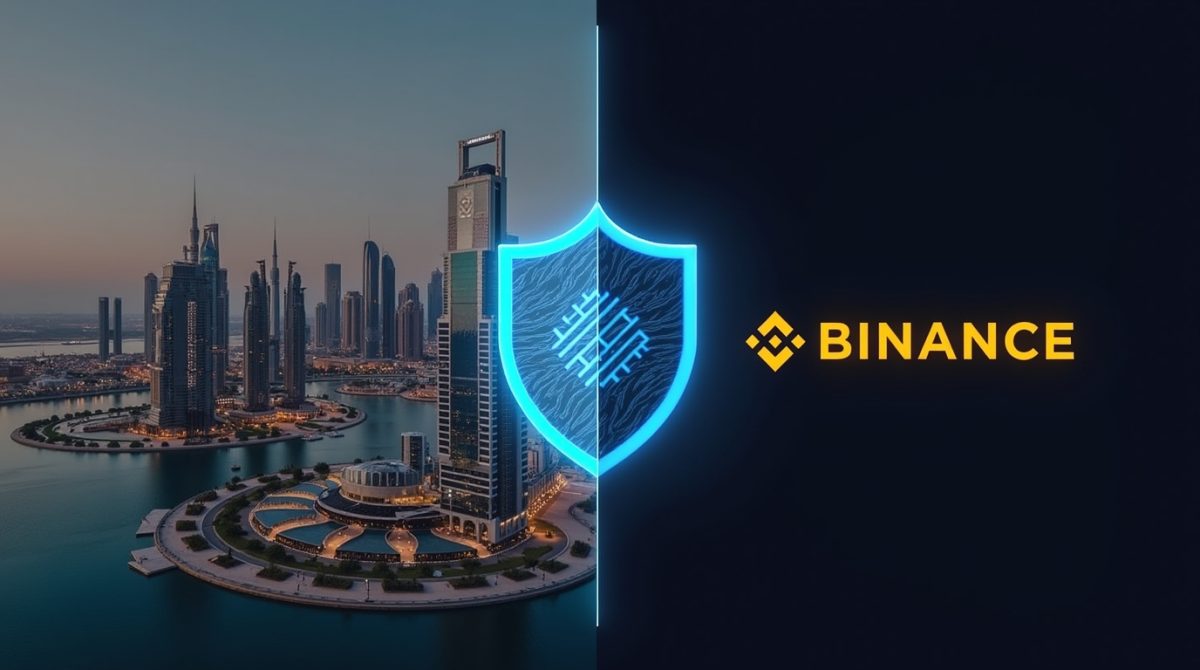
This is not a superficial marketing announcement. Binance’s operations today go live through a sophisticated, multi-entity structure designed to satisfy institutional compliance requirements:
- Exchange Operations: Handled by Nest Services Limited, operating a Multilateral Trading Facility (MTF) for spot and derivatives.
- Custody & Settlement: Crucially, Nest Clearing and Custody Limited is now managing the clearing and, most importantly, the regulated custody of digital assets.
- Prime Brokerage: BCI Limited has commenced investment dealing and broker-dealer services.
Why This Matters (The “So What?”)
For years, institutional capital has sat on the sidelines, waiting for major crypto players to move from “transitional” licenses to full, operational compliance.
Today’s launch is the signal the market has been waiting for. By operationalizing this structure under ADGM, Binance has effectively proven that its infrastructure, particularly its custody and settlement mechanisms, can meet the highest global standards of technology governance and security.
It signifies the end of the “wild west” era in the UAE and the beginning of the regulated institutional era.
The Tokenova Perspective
At Tokenova, we view this as total validation of the UAE’s regulatory strategy.
When the world’s biggest exchange roots its institutional operations in Abu Dhabi’s regulatory soil, it raises the bar for everyone. It confirms that the future of Web3, especially Real-World Asset (RWA) tokenization, depends entirely on compliant, secure infrastructure.
For projects looking to enter the UAE in 2026, “good enough” security is no longer acceptable. The benchmark has just been set by ADGM and Binance.
Looking Ahead
All eyes now turn to next week’s Web 3.0 Expo – Dubai Edition (Jan 14-15). With the Binance/ADGM precedence set today, expect a flurry of announcements as other Tier-1 players rush to demonstrate equivalent compliance levels.
Frequently Asked Questions (FAQs)
1. What does Binance’s “go-live” under ADGM regulation mean?
Binance has officially started its fully regulated operations within the Abu Dhabi Global Market (ADGM). This marks the beginning of Binance’s comprehensive institutional services under the strict supervision of ADGM’s Financial Services Regulatory Authority (FSRA), a globally recognized regulator.
2. How is Binance structuring its operations in the UAE?
Binance is operating through a sophisticated, multi-entity structure. This includes:
-
Exchange Operations: Managed by Nest Services Limited through a Multilateral Trading Facility (MTF).
-
Custody & Settlement: Nest Clearing and Custody Limited handles the clearing and regulated custody of digital assets.
-
Prime Brokerage: BCI Limited is responsible for investment dealing and broker-dealer services.
3. Why is Binance’s launch in ADGM important?
This launch represents a significant shift from transitional licenses to full operational compliance. It signals to the market that Binance’s infrastructure, particularly its custody and settlement mechanisms, meets the highest global standards of security and technology governance.
4. What does this mean for the future of Web3 and crypto in the UAE?
The launch establishes a regulated, secure infrastructure for Web3 projects in the UAE, signaling the end of the “wild west” era and the beginning of a new, regulated institutional era. It sets a benchmark for other projects to meet regulatory standards, particularly in the field of Real-World Asset (RWA) tokenization.