
You are building in a place where two things are true at the same time.
Islamic finance is no longer “niche.” And digital assets are no longer “unregulated experimentation.”
On the Islamic finance side, the latest major industry reporting puts global Islamic finance assets at US$5.98 trillion in 2024 (a reported 21% year-on-year increase).
On the digital-assets side, the rulebooks have matured. Stablecoin and payment token rules exist. Crypto token regimes have been updated. Tokenized securities frameworks have moved from draft to reality in key markets.
This is exactly why “Islamic banking blockchain compliance” has become a serious topic in 2026.
It is not about putting a smart contract on a brochure and calling it halal.
It is about building Shariah governance, auditability, and real-asset integrity into the technology so products can move at Web3 speed without breaking Islamic rules or local regulatory expectations.
Islamic banking blockchain compliance means designing blockchain systems and smart contracts so they comply with (1) Shariah principles such as the prohibition of interest (riba), excessive uncertainty (gharar), and gambling (maysir), and (2) banking and digital-asset regulations, including licensing, custody controls, disclosures, and AML/CTF expectations.
Why this is getting urgent in 2026
A real thing has happened in the Gulf in the past 18 months.
Islamic fixed-income markets are deepening. The sukuk market has crossed major milestones, including sukuk outstanding surpassing US$1 trillion (per S&P commentary tied to industry conference reporting) and continued issuance growth.
At the same time, market infrastructure is modernizing fast. For example, Nasdaq Dubai reported a record year in 2025 with US$30.6 billion in new debt listings, and public reporting around early 2026 highlights outstanding sukuk value surpassing US$100 billion on that venue.
Now connect that to Shariah.
Shariah compliance is not only a values layer. It is also a documentation and governance layer. Shariah rules prohibit riba, gharar, and maysir, and also restrict harmful activities. That pushes Islamic finance toward asset-linked structures and clear contractual terms.
In practice, the friction shows up in onboarding, asset verification, documentation, ongoing supervision, and audits.
This is where blockchain can help, but only if you treat it like compliance infrastructure.
A blockchain is a distributed ledger that can make records tamper-evident and tamper-resistant, but “immutable” is a simplification and must be handled with care in real deployments.
That nuance matters for banks, regulators, and Shariah boards.
Shariah compliance on-chain: what “allowed” really means
Most people summarize Islamic finance as “no interest.” That is true, but incomplete.
A practical Shariah-aligned blockchain system must help you avoid three core prohibitions and prove two core positives:
Shariah prohibits:
- Riba (commonly translated as interest).
- Gharar (excessive uncertainty in contracts).
- Maysir (gambling and speculation-like structures).
Shariah requires:
- Clarity of terms and enforceable rights and obligations.
- Connection to real economic activity, often through ownership, leases, or participation in ventures rather than pure debt.
The 2026 Shariah-tech reality: the sukuk “substance” debate is now a design constraint
If you are building tokenized sukuk or tokenized Islamic fixed-income products, you cannot ignore where the standards conversation has been heading.
Shariah standard-setting discussions have pushed harder on “asset-backed” substance and meaningful ownership transfer, rather than structures that feel economically like conventional bonds. This is at the center of the ongoing debate around AAOIFI’s draft standard work on sukuk (Standard 62), with public commentary focusing on ownership transfer, risk-sharing, and practical operational impacts.
The takeaway for builders is simple.
Tokenization does not “fix” Shariah issues. It makes them more visible.
If your token represents a claim that is not backed by real ownership or clearly defined rights, blockchain will not save it. It will only make it easier to audit and challenge.
What blockchain can do well for Shariah governance
A strong blockchain design can support Islamic finance governance in three useful ways:
First, it can create continuous audit trails that reduce after-the-fact reconstruction.
Second, it can enforce rule-based controls at transaction time, not weeks later during review. This is the heart of “compliance-by-design.”
Third, it can help prove asset lineage and operational constraints, which matters in structures where ownership, use, and risk allocation are central.
Smart contracts that work for Islamic finance products
Smart contracts sound perfect for Shariah because they can enforce rules automatically.
The risk is also obvious.
If the contract logic is wrong, it can violate Shariah instantly, at scale.
So in 2026, the winning pattern is not “code replaces scholars.”
It is “code makes scholars scalable.”
Here are the smart-contract patterns that map cleanly to mainstream Islamic finance structures, when built and reviewed correctly.
Murabaha automation
Murabaha is often described as cost-plus sale financing. In practice, Shariah acceptability depends on clear asset purchase and resale terms, and the avoidance of interest-like mechanics.
A compliant smart contract design usually needs:
- A verified asset purchase event (bank or SPV acquires the asset).
- A clear resale price and payment schedule.
- Controls that prevent the contract from morphing into an interest-bearing loan via late-fee logic or compounding behavior.
Ijara and rent-to-own flows
Ijara is a lease structure, where payments are tied to use of an asset. That naturally fits programmable payment schedules and condition checks if the underlying legal structure is correct.
A strong on-chain Ijara design emphasizes:
- A clean asset registry reference (what is being leased).
- Transparency in responsibilities (maintenance, insurance, early termination).
- Controlled ownership transfer only when contractual conditions are met.
Profit-sharing structures for venture-style finance
Profit-sharing and partnership structures can benefit from automated distribution logic, but only if inputs are trustworthy.
That means your architecture must treat data feeds as governance objects.
If a contract distributes profits based on a manipulated oracle, the system can become gharar-like in practice because uncertainty gets injected into the settlement logic.
Sukuk and tokenized ownership
This is where the Gulf conversation is moving fastest.
Tokenization can reduce minimum ticket sizes and widen participation, but the underlying Shariah requirement still centers on what investors actually own and what risks they bear.
Two regional signals matter for a Web3 audience in the Emirates:
- Abu Dhabi Islamic Bank launched Smart Sukuk (fractional sukuk access) as a digital investment experience, and outside legal commentary highlighted the step-change in minimum tickets compared with typical private placement norms.
- Dubai Islamic Bank signed an MoU with Crypto.com that includes exploring tokenization of real-world assets, explicitly including sukuk and real estate portfolios via the Cronos chain.
Those are not “lab experiments.” They are market-facing moves that point toward tokenization as a mainstream Islamic finance tool in this region.
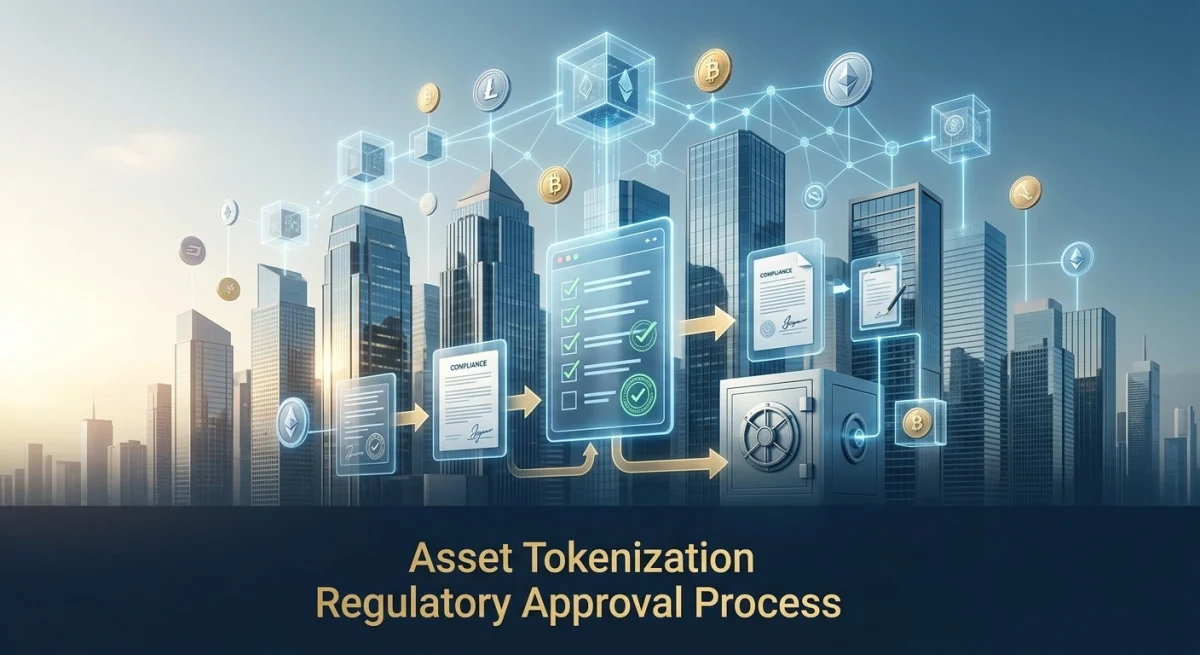
Regulation and tokenization signals in Dubai and Abu Dhabi for 2026
If you are building for users in the UAE, compliance is not only Shariah.
It is also licensing, custody, disclosures, consumer protection, and AML controls.
In 2026, the practical reality is “multiple regimes,” depending on your activity and where you operate.
Payment tokens and stablecoin-like activity
The Central Bank of the UAE Payment Token Services Regulation states that no person may perform payment token services in the UAE unless licensed or registered under that framework.
Legal analysis also notes the PTSR’s jurisdictional boundaries relative to the financial free zones and its role in bringing stablecoin services into a clearer regulatory perimeter.
For Islamic banking blockchain compliance, the key design implication is that a “Shariah-compliant payment token” still needs a compliant operating model and regulatory permissions where required.
Virtual-asset activity and marketing rules
For Web3 projects, marketing compliance is not optional.
Virtual Assets Regulatory Authority issued marketing regulations with an effective date of October 1, 2024, and formal documents describe the scope and consumer protection intent.
Those rules matter if your Islamic finance product includes token issuance, custody, exchange features, or promotion into the Dubai market.
Tokenized securities and commodity token contracts
At the federal level, the Securities and Commodities Authority published draft regulations and invited stakeholder feedback in early 2025, explicitly framing the goal as regulating issuance and trading of security tokens and commodity tokens in UAE capital markets.
Subsequent legal commentary discusses regulation of security tokens and commodity token contracts as a framework that includes trading, settlement, and custody expectations, including default routes through licensed markets or facilities.
Crypto token regulation inside the financial free zones
Inside Dubai International Financial Centre, the Dubai Financial Services Authority implemented major updates to the Crypto Token framework effective January 12, 2026, with official explanations and supporting materials.
Outside analysis of those changes emphasizes a shift away from regulator-maintained “recognized token” lists toward greater firm responsibility for token suitability assessment and documentation.
Inside Abu Dhabi Global Market, the regulator’s guidance and amendments have been refreshed in recent years, with official announcements pointing to framework updates and guidance revisions for virtual asset firms.
If you are targeting Islamic finance users, this matters because “Shariah-compliant tech” still lives inside regulatory perimeter lines. Those lines change the product shape.
A practical implementation blueprint for Shariah-compliant blockchain systems
This is the part most people skip.
In 2026, the hard work is not “choosing a chain.”
The hard work is designing governance so the chain can be used in regulated finance.
A clean implementation framework has four layers.
Shariah governance layer
You need an approval workflow that treats smart contracts like product documents.
That means:
- A Shariah supervisory review process that can evaluate contract structure and operational reality, not only marketing language.
- A stance on contentious areas like sukuk asset ownership transfer expectations, which are actively debated in standards and market commentary.
The practical goal is “fatwa-ready code.”
That means readable specifications, version control, and an audit log of what changed and why.
On-chain controls layer
This is where blockchain compliance stops being theoretical.
A bank-grade Shariah-compliant system usually needs:
- Role-based permissions and segregation of duties.
- Allowlists for counterparties and asset types, aligned with Shariah screens.
- “No-interest” logic that is explicit, including how defaults and late payments are handled.
- Strong logging and monitoring, because blockchain records are tamper-evident but still require interpretation and supervision.
Regulatory compliance layer
Even the most ethical product can fail if it ignores licensing, custody, and marketing rules.
A minimum regulatory alignment checklist for UAE-focused teams includes:
- Payment token and stablecoin service scoping against the central bank regulation.
- Token classification and suitability controls where crypto token regimes apply, including the 2026 DIFC changes.
- Marketing governance where virtual asset marketing rules apply.
Security and integrity layer
Security is not only a technical issue. For Islamic finance, it is also an ethics issue.
If customer funds are exposed to preventable abuse, you have created harm.
Independent reporting on crypto crime shows material illicit flows and theft trends across the ecosystem, which is why banks and regulators demand strong controls.
Your blockchain compliance posture should include:
- Formal audits and monitoring.
- Incident response playbooks.
- Custody-grade key management and operational resilience.
- Clear customer disclosures that reduce gharar by reducing misunderstanding.
Halal Hardened: Building Web3 You Can Defend in a Boardroom
In 2026, Shariah-compliant blockchain is an operating system for trust. If you want Islamic finance products to scale in the UAE, you have to bake governance into the build, from Shariah reviews and audit trails to licensing scope, custody controls, and clean marketing. The teams that win will treat smart contracts like regulated product infrastructure, not a growth hack. Do that, and tokenization stops being a headline and becomes a dependable rail for real assets, real users, and real markets.
FAQ
- What makes a blockchain system Shariah-compliant?
The technology itself is not “halal” or “haram.” The system is Shariah-compliant when it avoids riba, gharar, and maysir in its contract logic and operations, and when it ties financial activity to permissible structures with clear terms and governance. - Can smart contracts automate Murabaha, Ijara, and Sukuk?
Yes, but only if the underlying legal structure is valid and the code enforces the right conditions, including asset verification, clear obligations, and governance review. Tokenized sukuk designs especially must reflect real ownership and risk-reward linkage. - What is the biggest compliance risk when putting Islamic finance on-chain?
The biggest risk is confusing transparency with correctness. A ledger can be tamper-evident but still record non-compliant transactions if the rules are wrong or data feeds are manipulated. - What is the most important 2026 lesson for UAE-focused builders?
Build governance first. Regulatory regimes around tokens, marketing, and payment-token services have tightened and matured across 2024–2026. If you design compliance late, you will rebuild the product. - Is there real market proof that Islamic tokenization is not just hype?
Yes. Public bank announcements include fractional sukuk platforms and partnerships that explicitly explore tokenizing sukuk and real estate portfolios, and market venues in the region reported scaling sukuk listings to record levels in 2025.