
Water rights are becoming a serious candidate for real world asset tokenization. In regions that face water stress and fast growing demand, the ability to track, trade and allocate water with precision is no longer optional. Blockchains and smart contracts can help, but they also bring a new layer of legal complexity that sits on top of already strict water and environmental regulation.
If you launch a water rights token and ignore this complexity, you risk enforcement action, blocked transactions or loss of trust from regulators and local communities. If you design your project around the right licenses and approvals, you gain the opposite. You gain a defensible structure that institutional partners can use, and that regulators in advanced hubs such as the UAE, the EU and Australia can understand.
This guide explains how water rights tokenization works in legal terms, which licenses you may need in the United States, the European Union and the UAE, how environmental and water authorities fit into the picture, and what an implementation roadmap looks like in practice. You can use it as a starting checklist when you structure your own water tokenization project or when you review a partner proposal.
Built on Hedera – Water Ledger – RWA & ReFi
Why Licensing Matters For Water Rights Tokenization
Water rights tokenization turns legally recognized water entitlements into digital tokens on a blockchain network. In practice each token represents a claim to use a defined quantity of water from a specific source under existing water law.
Projects in this space do not operate in a legal vacuum. They sit on top of two different legal pillars. One pillar is traditional water law and environmental regulation. The other pillar is financial regulation for digital assets and tokenized securities. Many regulators and legal commentators now describe tokenized water rights as hybrid instruments that combine features of property, permits and sometimes securities.
This hybrid status means you will usually need both sectoral approvals from water and environmental authorities and financial licenses or exemptions. You also need to align your technical design with compliance obligations from day one.
1. How Water Rights Tokenization Works In Legal Terms
Most systems begin with legally valid water rights held by a person, a company, a cooperative, or a special purpose vehicle. Those rights are often defined by public authorities in licenses or permits that specify volume, location, season and purpose of use.
A tokenization platform then takes those rights and represents them as digital tokens. A single token might represent one cubic meter of water, one megalitre, or a pro-rata claim on a larger entitlement. Smart contracts manage issuance, transfer and redemption of these tokens. The real legal right usually sits in a registered title or permit. The token gives its holder a claim against the entity that controls that title.
Because the token tracks something that exists in the physical world and under public law, regulators will not treat it like a simple utility token. Many will see it as a security, a commodity contract, or an asset-referenced token. That is where licensing begins.
2. United States: Securities And Money Transmission
2.1 Securities analysis under the Howey Test
In the United States, the Securities and Exchange Commission uses the Howey Test to decide if a token is a security. The Supreme Court in SEC v. W. J. Howey Co. defined an investment contract as an investment of money in a common enterprise with a reasonable expectation of profits from the efforts of others.
If you sell water tokens to outside investors and you promote them as an opportunity to profit from future price increases or platform revenues, they will likely meet this test. In that case, the tokens are securities, and you must either register the offering with the SEC or qualify under an exemption, such as Regulation D, Regulation A+, or an offshore Regulation S structure.
Each of these paths has its own limits, investor qualifications and disclosure requirements. A compliant tokenized offering will typically include formal offering documents that describe the water rights, risks, use of proceeds and token mechanics in a way similar to a traditional private placement.
2.2 Broker-dealer and trading venue obligations
If your business facilitates trading in water tokens that are securities, you are likely operating as a broker-dealer and possibly as an alternative trading system. Under US law, a platform that matches buy and sell orders in securities for compensation usually needs to register as a broker-dealer and obtain approval to run an ATS.
This registration brings ongoing oversight by FINRA and the SEC. It also brings obligations around know-your-customer procedures, anti-money-laundering controls, transaction reporting and supervision of associated persons. Many tokenization projects reduce this burden by partnering with an existing licensed broker-dealer or ATS rather than seeking direct authorization.
💧 blockchain for water rights with katrina donaghy
2.3 Money transmitter and virtual currency rules
Even if your tokens are not securities, they can still trigger money transmitter regulation. US financial crime authorities treat administrators and exchangers of convertible virtual currencies as money services businesses. These businesses must register with FinCEN and comply with AML and record-keeping rules.
Several states run their own licensing regimes for money transmission that cover crypto activities. New York’s BitLicense regime is one of the most demanding and applies to virtual currency business activity for New York customers.
A water token trading platform that holds customer tokens, converts them, or facilitates exchange for money will often need both federal registration as a money services business and state money transmitter licenses, unless a specific exemption applies.
3. European Union: MiCA And Asset-Referenced Tokens
The European Union has introduced the Markets in Crypto-Assets Regulation, which is Regulation (EU) 2023/1114. It creates a harmonized legal framework for issuers of crypto-assets and for crypto-asset service providers across the EU.
MiCA becomes fully applicable across the EU on 30 December 2024. Its framework for asset-referenced tokens and e-money tokens started to apply from 30 June 2024.
Under MiCA, asset-referenced tokens are crypto-assets that aim to maintain a stable value by referencing several assets, such as commodities, other crypto-assets, or a basket of currencies.
A token that represents claims on water volumes or water rights may fall in this asset-referenced token category, because its value is linked to an underlying resource rather than to a single fiat currency.
Issuers of asset-referenced tokens in the EU must obtain authorization from a competent national authority. They must also publish a crypto-asset white paper that meets MiCA content rules.
The white paper needs to explain the project, the token design, the rights of holders, the underlying assets and the main risks. The issuer must meet governance, capital and reserve management standards that are proportionate to the risks of the token.
Service providers that offer custody, trading, or exchange of these tokens in the EU must also obtain a MiCA license as crypto-asset service providers and follow rules on conduct, prudential safeguards and IT security.
MiCA authorization and white paper preparation will be central tasks for a water tokenization project that wants EU participation
4. UAE And Other Innovation Hubs
The United Arab Emirates is positioning itself as a leading hub for regulated digital assets and real-world tokenization. In Abu Dhabi, the Financial Services Regulatory Authority of Abu Dhabi Global Market has published detailed guidance on how virtual assets and digital securities are regulated. Tokens that represent ownership or economic rights in underlying assets are treated as specified investments within the financial services regime.
Virtual asset businesses that operate within ADGM, such as exchanges, brokers or custodians, must obtain the appropriate financial services permissions and comply with prudential, conduct and AML rules.
Dubai has established the Virtual Assets Regulatory Authority as a dedicated regulator for virtual assets. VARA’s Virtual Assets and Related Activities Regulations 2023 introduced an activity-based licensing system for issuance, exchange, custody and other services.
A water-rights token project that targets professional or institutional users in the UAE would normally need an appropriate license in ADGM or from VARA in Dubai, depending on where it operates. It also has to align with UAE water and environmental law, since most large-scale water resources in the UAE are controlled and allocated by public authorities.
For projects that plan to scale in the wider region, starting in a UAE free zone that already has a clear virtual asset framework can lower regulatory uncertainty.
5. Securities Market Rules For Water Tokens
If regulators classify water tokens as securities, traditional securities rules apply in addition to crypto-asset rules.
In the United States, platforms that match trades in security tokens must usually operate as alternative trading systems under Regulation ATS. They need a broker-dealer license and must comply with FINRA oversight.
In the EU, a trading venue for water-rights tokens that qualify as financial instruments may require authorization as a multilateral trading facility under MiFID II. MiCA and MiFID will work together in that case.
Firms that distribute water tokens as investments must also comply with local rules on financial promotions, suitability assessments and product governance. These obligations already apply to digital securities in several jurisdictions, including ADGM and many EU member states.
This makes it important to document clearly what rights each token gives, how investors may exit, and what information they will receive over the life of the project.
6. Environmental And Water Authority Approvals
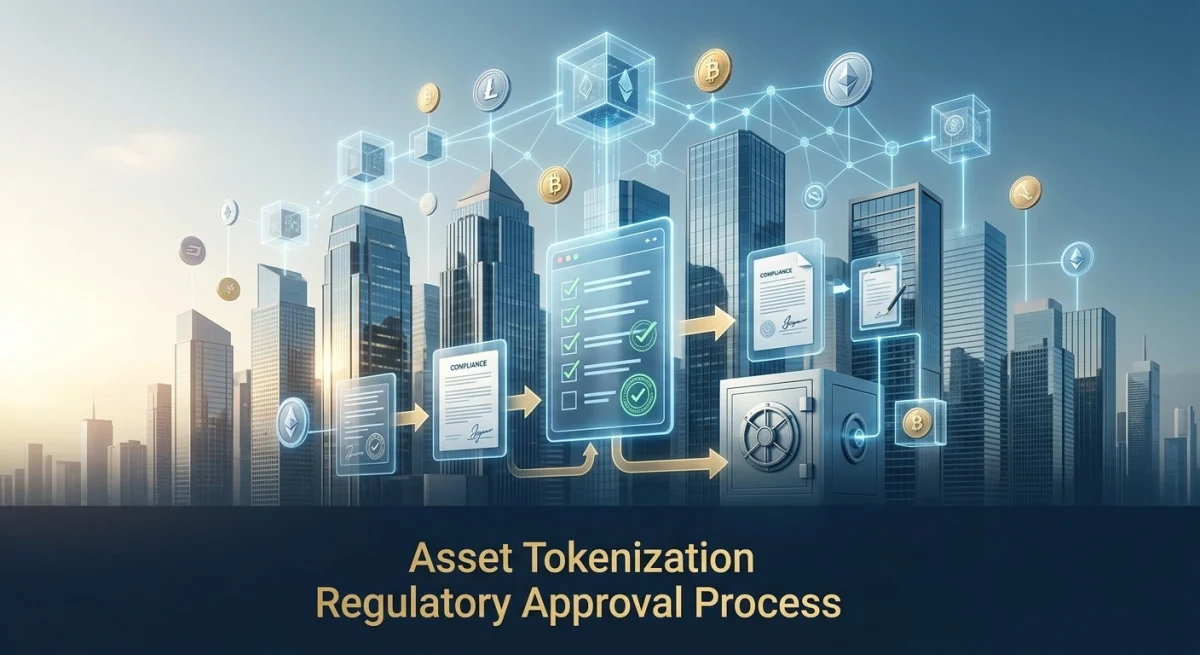
Tokenization does not replace the need for valid water rights under public law. Every project must prove that the underlying rights exist, can be transferred, and are being used within legal limits.
In many jurisdictions, including US western states, water rights are created and managed through permits, licenses and adjudication orders. Changes in how a water right is used, who holds it, or where it is diverted often require a formal change petition and approval by the water authority.
For example, in California, the State Water Resources Control Board uses a petition process to approve changes to appropriative rights. The applicant must show that the change will not injure other legal users of water or harm public trust resources.
If a tokenization project pools rights, reallocates them or moves them between users or places, the same kind of approvals will usually be required. Environmental assessment may also be needed when changes could affect rivers, aquifers or ecosystems. Such assessments are common under national and state environmental review laws whenever large water transfers or new diversions are proposed.
From a compliance strategy view, it is wise to build a close relationship with the relevant water authorities. Many authorities welcome better transparency in water trading. Pilot projects, such as the Water Ledger trials in Queensland, have shown that blockchain can support more transparent and timely water trades.
However, those pilots also confirm that platforms must encode existing water allocation rules in detail, rather than trying to bypass them.
7. International And Cross-Border Compliance
Water law, property law and crypto regulation differ widely between countries. That makes international expansion a second stage rather than a first step for most water tokenization projects.
Australia has mature water markets, especially in the Murray-Darling Basin, with long experience in tradable water entitlements and allocations.
This has enabled pilots who use distributed ledgers for water trading. For example, the Water Ledger project in Queensland tested blockchain for near real-time settlement and improved transparency.
In contrast, many jurisdictions treat water as a public resource that cannot be privately owned in a way that supports trading. In those places it may not yet be legally possible to tokenize water rights in a way that mirrors a private property market.
On the financial side, cross-border transfers of water tokens raise additional AML and sanctions compliance needs. The Financial Action Task Force travel rule requires virtual asset service providers that handle qualifying transfers to exchange originator and beneficiary information.
Platforms must also account for local data protection rules. The EU General Data Protection Regulation, for example, treats certain on-chain data as personal data when it can be linked to individuals. That can influence choices between public and permissioned chains and how user identities are handled.
Given these layers of complexity, many teams start with one primary jurisdiction, prove the model, then adapt it country by country with local legal counsel.
8. Implementation Roadmap And Timeframes
Launching a compliant water tokenization project usually takes at least one year of coordinated legal and technical work.
You can think about the process in three broad phases.
Phase 1: Legal and rights assessment.
The first step is to map out the legal position of all water rights you plan to tokenize and the regulations that apply in your chosen jurisdiction. That includes securities rules, virtual asset laws, water codes and any commodity or derivatives laws that may apply. You also need to confirm title, volume, priority and transferability of each right through documentation and, where needed, legal opinions.
Phase 2: Licensing and platform design.
Next you prepare license or exemption filings and build your technology around those requirements. For example, if you pursue a securities exemption in the United States you will draft offering materials that align with that exemption and integrate investor qualification checks into your onboarding flow. In the EU you will prepare a MiCA white paper and an authorization application if your token qualifies as an asset-referenced token.
At the same time your technical team implements smart contracts, KYC and AML workflows, custody arrangements and interfaces for regulators. Smart contracts must enforce constraints such as transfer limits or investor categories if those appear in your regulatory authorizations.
Phase 3: Pilot, launch and continuous monitoring.
Once licenses and core features are in place, teams usually conduct a limited pilot with selected users. This stage validates both water-rights processes and trading behavior. You monitor compliance, refine reporting to authorities and respond to any feedback. After a successful pilot, you can scale participation. You also maintain a compliance program that tracks new regulations, updates smart contracts when rules change, and prepares for periodic audits or inspections.
In practice you should expect twelve to eighteen months between concept and a fully regulated live platform, depending on jurisdiction and complexity.
9. Risk Mitigation And Best Practices
The legal and technical surface area of a water tokenization project is large. A structured risk approach helps.
Regulatory risk drops when you engage domain-specific counsel early. You need experts who understand both blockchain regulation and water or natural resources law. They can guide core decisions such as whether to treat the token as a security and which exemptions or licenses to prioritize.
Technical and security risk drops when you build to regulatory-grade standards. That usually includes strong access control, regular penetration testing, independent smart contract audits and clear incident response plans. Regulators in financial centers such as ADGM and EU member states expect regulated firms to meet robust IT and cybersecurity standards.
Turning Compliance Into A Strategic Advantage
Tokenizing water rights is a legal and regulatory project that touches securities law, virtual asset rules, water codes and environmental policy at the same time. Teams that treat licensing as an afterthought often meet resistance from regulators and struggle to scale beyond small pilots. Teams that treat compliance as part of the product design create structures that institutional partners, public authorities and communities can trust.
A clear licensing strategy is the foundation. In practice this means understanding at the outset whether your water tokens are likely to be treated as securities, asset-referenced tokens or utility instruments, and then aligning your structure with the relevant rules in each target jurisdiction. It means mapping the approvals you need from water and environmental agencies so that every token corresponds to a valid, enforceable right. It also means choosing blockchain infrastructure, custody and smart contract patterns that match regulatory expectations in advanced hubs such as the UAE, the EU, the United States and Australia.
When you combine sound legal structuring with robust technical controls, tokenized water rights can support more transparent allocation, faster settlement and better data on how scarce water resources are used. That creates benefits for investors, for utilities, for regulators and for local stakeholders. It also positions your project to participate in a broader real world asset ecosystem where sustainability focused tokens, including natural resource assets, are drawing increasing attention.
If you are planning a water tokenization initiative now, this is the moment to build the compliance framework that will carry you through the next decade. Use the licensing categories and regulatory touchpoints in this guide as a checklist. Involve specialized counsel early. Engage constructively with water authorities and financial regulators in the jurisdictions that matter to you, including innovation hubs that are already building clear virtual asset regimes. With this approach, your project does not just stay within the rules. It turns compliance into a long term competitive edge.
Compliance risk across borders reduces when you limit early activity to one or a few well-understood jurisdictions. You can then add new countries once you have clarified water law, virtual asset rules and tax treatment in each place. Pilot projects such as the Water Ledger trial in Australia show that starting under the supervision of a specific regulator or within a structured program can help refine both business logic and compliance.
Taken together, these practices help your project to remain credible with regulators, investors and local communities.
FAQ
Do all water tokenization projects require securities licenses?
Not all projects need a securities license. If tokens are designed and used only as instruments to access water services and there is no realistic expectation of profit, they may fall outside the definition of a security in some jurisdictions.
In practice, many investors still view transferable water tokens as investments. This means that in many cases it is safer to assume securities rules apply and either register or rely on a clear exemption.
How long does licensing usually take?
Timeframes vary across jurisdictions and license types. In the United States, preparing and clearing an offering with the SEC under a full registration or a Regulation A+ qualification can take many months. Broker-dealer and ATS approvals also tend to be multi-month processes.
In the European Union, authorization of an asset-referenced token issuer and approval of the MiCA white paper also require a detailed application and regulator review.
On the water side, change petitions and new permits can range from a few months for simple, uncontested cases to much longer where environmental concerns or competing users are involved.
Most projects that aim for a full compliance plan take twelve to eighteen months from legal scoping to live launch.
Can water tokens be traded internationally?
They can, but only when regulation in each relevant country allows it. International trading requires compliance with AML and sanctions rules such as the Financial Action Task Force travel rule for virtual asset service providers.
It also requires compliance with local water and property laws. Some countries treat water as a public resource that cannot be owned or transferred in private markets, which limits or prevents tokenization. In other countries, foreign participation in land and water markets is sensitive and may be restricted.
Because of this, many teams segment markets by jurisdiction and use geofencing, local licensing and targeted onboarding rather than allowing unrestricted global trading.
What happens if regulations change after launch?
Regulatory frameworks for both crypto assets and water are evolving. When rules change, regulators usually provide a transition period so that existing businesses can adapt. For example, MiCA has staged application dates, and guidance on implementation continues to evolve.
A project should therefore maintain a compliance function that tracks new laws, reviews how they affect the platform, and updates policies or smart contracts where needed. Keeping open communication with supervisory authorities in places like ADGM or EU member states can also help manage changes smoothly.
Are there sandbox programs that can support water tokenization?
Several regulators offer fintech or virtual asset sandboxes that can host innovative projects, even if they are not specific to water. Examples include sandboxes operated by the Monetary Authority of Singapore and by regulators in the UAE and the UK.
Participation in such programs allows a project to test its model with a limited user base and under supervision, while regulators observe and learn. This can ease the path toward full authorization later.