Dubai has taken another decisive step toward digital transformation, and Ripple is now officially part of that journey. Through its first government-linked custody agreement in the region, Ripple UAE custody deal, blockchain-based property tokenization, and XRPL are converging to answer a key question: Can public-sector real estate ownership be securely managed on a public blockchain? Dubai’s answer is a confident yes.
What makes this Ripple partnership a regional first?
Ripple has partnered with Ctrl Alt to support the Dubai Land Department’s (DLD) initiative to digitize property ownership records using blockchain technology. Under this collaboration, Ripple provides institutional-grade digital asset custody infrastructure, while Ctrl Alt manages local execution and operational support.
This marks the first time a government entity in the Middle East has issued real estate title deeds on a public blockchain. Ownership records will be securely stored on the XRP Ledger (XRPL), a move that positions Dubai at the forefront of real-world asset tokenization.
Why did Dubai choose blockchain for property titles?
Dubai’s decision is part of a broader strategy to digitize city services and modernize public infrastructure. Real estate, as one of the city’s most valuable economic pillars, was a natural starting point.
Blockchain enables immutable ownership records, faster verification, reduced fraud risk, and seamless integration with future financial services such as tokenized mortgages and fractional ownership. By leveraging XRPL, the DLD gains scalability and security without sacrificing transparency.
What role does Ripple play in this initiative?
Ripple’s contribution focuses on secure, scalable custody solutions designed for institutional and government use. Its technology ensures that tokenized property deeds are protected at the infrastructure level, meeting regulatory and operational standards required for public-sector deployment.
For Ripple, this agreement represents its first major custody deal in the UAE, reinforcing its strategic expansion across the Middle East. It also validates XRPL’s positioning as a blockchain suited for serious financial and governmental applications — not just payments.
How does this project fit into Dubai’s wider digital vision?

The initiative has already entered a pilot phase in collaboration with Ripple, Ctrl Alt, and Dubai’s Virtual Assets Regulatory Authority (VARA). It aligns closely with Dubai’s long-term goal of becoming a global leader in digital assets, smart cities, and blockchain-powered public services.
This project is not an isolated experiment. It sits alongside broader efforts to integrate blockchain into finance, real estate, and government operations, creating a connected digital ecosystem that supports innovation at scale.
Why is Ripple gaining momentum in the UAE?
Ripple’s growing footprint in the UAE did not start with this deal. Earlier this year, the company became the first blockchain payments provider licensed by the Dubai Financial Services Authority (DFSA). Since then, it has partnered with local institutions such as Zand Bank and Mamo, further embedding itself in the region’s financial infrastructure.
In addition, Ripple’s RLUSD stablecoin has received regulatory approval for use within the Dubai International Financial Centre (DIFC), strengthening its compliance credentials and institutional appeal.
Is this the future of real estate and public records?
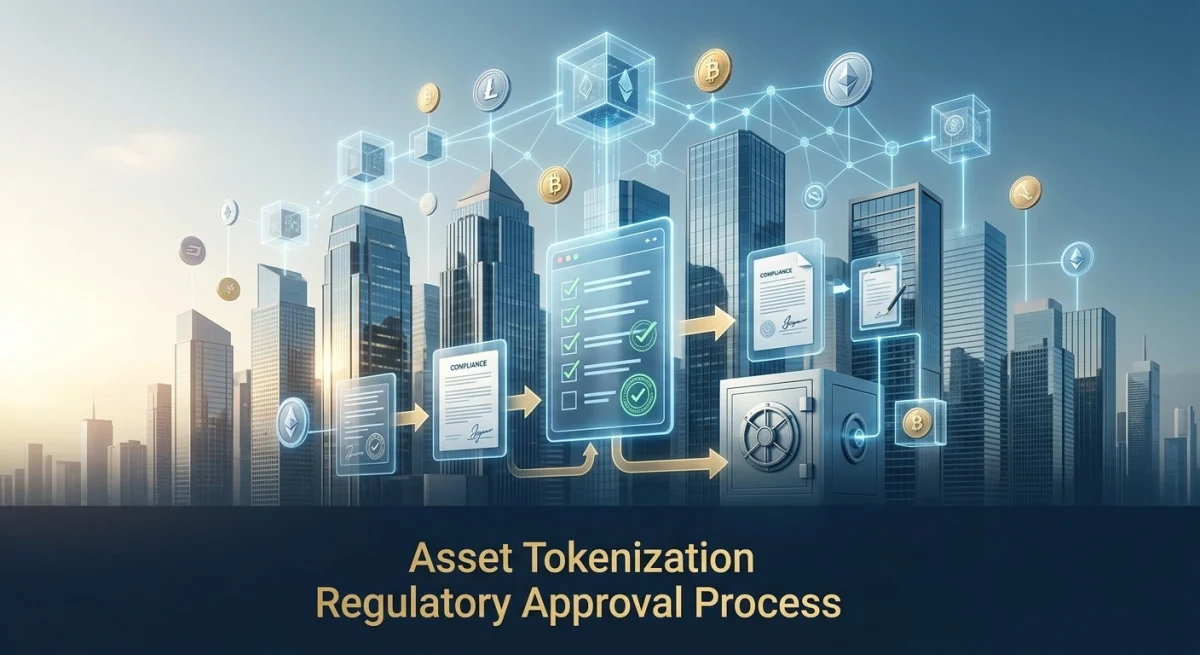
Tokenized real estate is increasingly viewed as a bridge between traditional assets and digital finance. Dubai’s approach shows how governments can adopt blockchain responsibly with regulation, custody, and infrastructure working together.
As cities worldwide explore similar models, Dubai’s early adoption may set a benchmark for how public-sector assets move on-chain without compromising trust or legal certainty.
If you’re exploring real-world asset tokenization, blockchain custody, or regulatory-compliant Web3 solutions in the UAE, understanding these developments is critical. Tokenwa helps institutions, founders, and investors navigate this evolving landscape with clarity and confidence.
Quick FAQ
What is Ripple’s role in Dubai’s property tokenization project?
Ripple provides secure, institutional-grade custody infrastructure for blockchain-based property deeds.
Why is XRPL used for this initiative?
XRPL offers scalability, security, and reliability suitable for government and financial use cases.
Is this Ripple’s first deal with a UAE government entity?
Yes, this is Ripple’s first major custody partnership linked to a government initiative in the UAE.