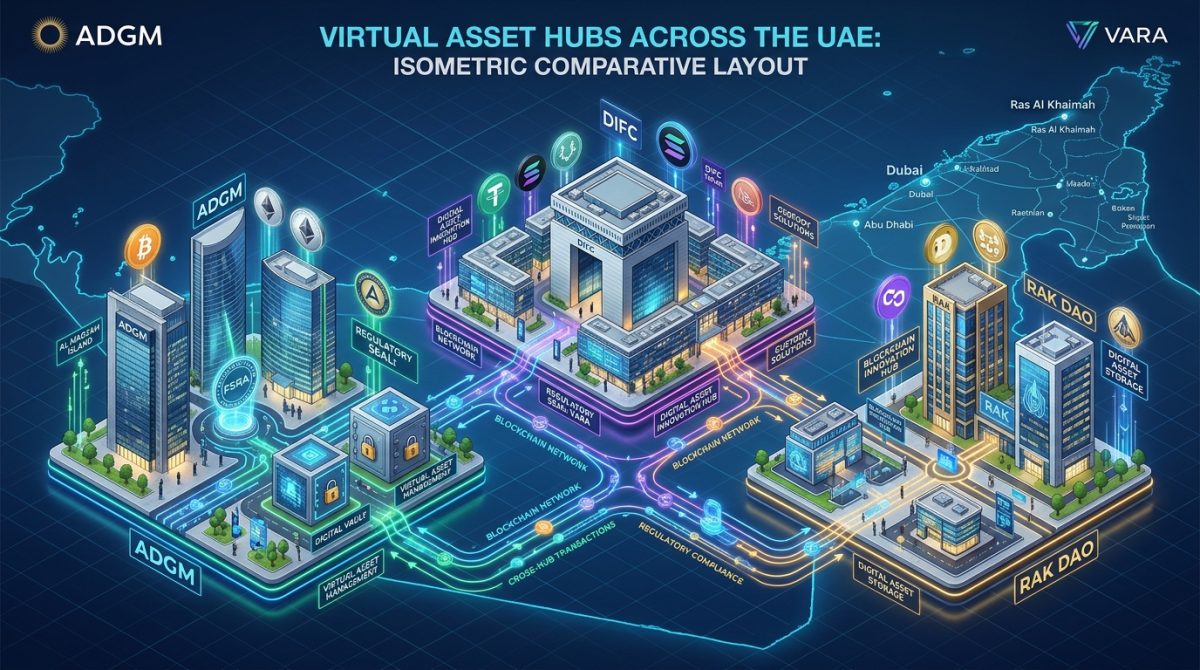

The United Arab Emirates is no longer experimenting with blockchain — it is actively implementing it. According to a new industry report, UAE blockchain adoption, digital asset infrastructure, tokenization initiatives, and regulated financial innovation are now becoming integral parts of the country’s economic framework. In short, blockchain in the UAE has moved beyond small-scale pilot programs and is entering a national execution phase across government services, financial systems, and digital payments.
The report, released by the Blockchain Center Abu Dhabi in collaboration with Binance, suggests that the Emirates have quietly built one of the world’s most advanced environments for regulated blockchain deployment.
How Has UAE Blockchain Adoption Evolved in Recent Years?
The UAE’s approach to blockchain initially began with pilot projects and regulatory sandboxes designed to test the technology’s potential. However, the latest findings indicate that the country has moved far beyond experimentation.
Today, several blockchain-powered systems are already running at scale. One of the most prominent examples is UAE Pass, the country’s digital identity platform, which now serves more than 11 million users and has recorded billions of authentication events.
These real-world applications demonstrate that blockchain is increasingly embedded in the UAE’s digital infrastructure rather than being treated as a speculative technology.
What Role Do Regulators Play in This Transition?
Regulatory clarity has been a central factor behind the rapid UAE blockchain adoption.
Financial authorities such as the Dubai Financial Services Authority and the Financial Services Regulatory Authority have already approved several stablecoin projects, helping create a controlled environment for digital payments.
Meanwhile, the Central Bank of the UAE has begun testing its own digital currency infrastructure. Early pilot transactions have already taken place, indicating that the country is actively preparing for the next generation of financial settlement systems.
By aligning regulatory frameworks with technological innovation, the UAE has created conditions that allow blockchain companies, banks, and technology providers to operate within a stable and predictable ecosystem.
Why Is Tokenization Becoming a Key Focus?
Another major pillar of the UAE’s blockchain strategy is asset tokenization.
Several initiatives are currently exploring the conversion of real-world assets — particularly real estate — into blockchain-based digital representations. Estimates suggest that up to $4 billion worth of property assets could eventually be tokenized through these programs.
Tokenization offers several advantages, including increased transparency, improved liquidity, and more efficient asset management. For a global financial hub like the UAE, these benefits align closely with the country’s broader ambition to modernize financial markets.
How Does the UAE’s Financial System Support Blockchain Growth?

The UAE’s massive payment and remittance ecosystem provides fertile ground for blockchain adoption.
Domestic payment networks process trillions of dirhams annually, while cross-border transfers linked to the UAE economy exceed tens of billions of dollars each year. Additionally, the majority of residents regularly send money abroad, creating significant demand for faster and more efficient settlement technologies.
These economic dynamics make blockchain-based payment systems particularly attractive as potential upgrades to existing financial infrastructure.
Why Are Major Global Players Becoming Involved?
The report also highlights how the UAE’s blockchain ecosystem has evolved from a startup-driven environment into a fully institutional landscape.
Today, the sector includes regulated exchanges, custodians, infrastructure providers, global banks, and multinational technology companies. Major investments, including multi-billion-dollar funding into global platforms operating within UAE regulatory frameworks, demonstrate growing institutional confidence.
This transformation suggests that blockchain is no longer viewed as a speculative sector but rather as an emerging pillar of national digital infrastructure.
Could the UAE Become a Global Model for Blockchain Implementation?
The evidence increasingly points in that direction. The country’s strategy combines regulatory coordination, institutional participation, and sovereign capital to scale blockchain technology in real economic systems.
Instead of debating the future of digital assets, the UAE is actively integrating them into government services, financial networks, and trade infrastructure.
For many observers, this shift illustrates how blockchain can evolve from an experimental technology into a production-ready national system.
If your organization is exploring opportunities in blockchain adoption, digital asset infrastructure, or tokenization, understanding developments like these is essential.
FAQ
What does UAE blockchain adoption mean in practice?
It refers to the large-scale integration of blockchain technologies into government services, financial systems, and digital infrastructure.
Is blockchain already used in UAE public services?
Yes. Platforms such as UAE Pass demonstrate real-world deployment across millions of users.
Why is the UAE investing heavily in blockchain?
The country sees blockchain as a strategic technology that can enhance financial infrastructure, digital services, and economic competitiveness.