The 2026 World Cup kicks off in two weeks. From June 11 to July 19, sixteen host cities across the United States, Canada, and Mexico will absorb several million traveling fans, and a meaningful share of those fans will be holding crypto rather than a thick stack of dollars, pesos, and Canadian loonies.
If that is you, this guide is the one you actually want. Not the breathless “crypto is the future of money” pitch, but the practical reality: what works, what does not, where the fees hide, what the taxman thinks, and why fans coming from the UAE are quietly the best-positioned crypto spenders at the entire tournament.
Let us get you spending smart across three countries, two currencies you do not normally carry, and one very long month of football.
TL;DR
- You will spend crypto through a card, not by handing Bitcoin to a taco vendor. A crypto debit or credit card converts your balance to local currency at the point of sale over the Visa or Mastercard rails, so acceptance is effectively universal wherever cards are taken.
- Stablecoins are the traveler’s best friend. Spending USDC or USDT avoids the volatility of holding BTC or ETH during your trip and, critically, minimizes the tax friction of spending.
- The three host countries are not equal. The US has the deepest direct-crypto acceptance (nearly 4 in 10 merchants now take crypto at checkout per a January 2026 survey), Canada is solid, and Mexico is growing fast but more cash-reliant outside major cities.
- Spending crypto is a taxable disposal in most countries, including the US and Canada. Stablecoins reduce this to near zero. Residents of the UAE, with 0% personal capital gains tax, have the cleanest setup of any visiting fans.
- You cannot pay FIFA directly in crypto. No crypto exchange is an official 2026 sponsor, and official tickets, hospitality, and most stadium concessions run on fiat and cards.
- Set everything up before you fly. Order your card, fund it, test it, and check FX and ATM fees while you still have time to fix problems.
First, a Reality Check: How “Spending Crypto” Actually Works Abroad
There is a persistent fantasy that spending crypto on holiday means scanning a QR code at every cafe while a merchant happily accepts your Bitcoin. Delete that image.
In practice, crypto spending in 2026 happens two ways, and you should understand both:
- Crypto cards (the way you will actually spend). A crypto debit or credit card links to your wallet or exchange balance. When you tap or swipe, the provider converts the necessary amount of crypto to local fiat in real time and settles with the merchant over Visa or Mastercard. The merchant has no idea crypto was involved. This means your “crypto acceptance” is really card-network acceptance, which covers tens of millions of merchants across all three host countries. This is the workhorse method for any traveling fan.
- Direct on-chain payments (growing, but patchy). Some merchants accept crypto directly through gateways like BitPay, Coinbase Commerce, or NOWPayments. A January 2026 survey from the National Cryptocurrency Association and PayPal found nearly 4 in 10 US merchants now accept crypto at checkout, and among those, crypto already accounts for more than a quarter of sales volume. That is real, but it is concentrated in crypto-forward businesses and online checkouts, not the average street-food stall in Guadalajara.
For 99% of your match-week spending, the card is the answer. The direct method is a bonus when you find it.
Step One: Get Your Card Sorted Before You Fly
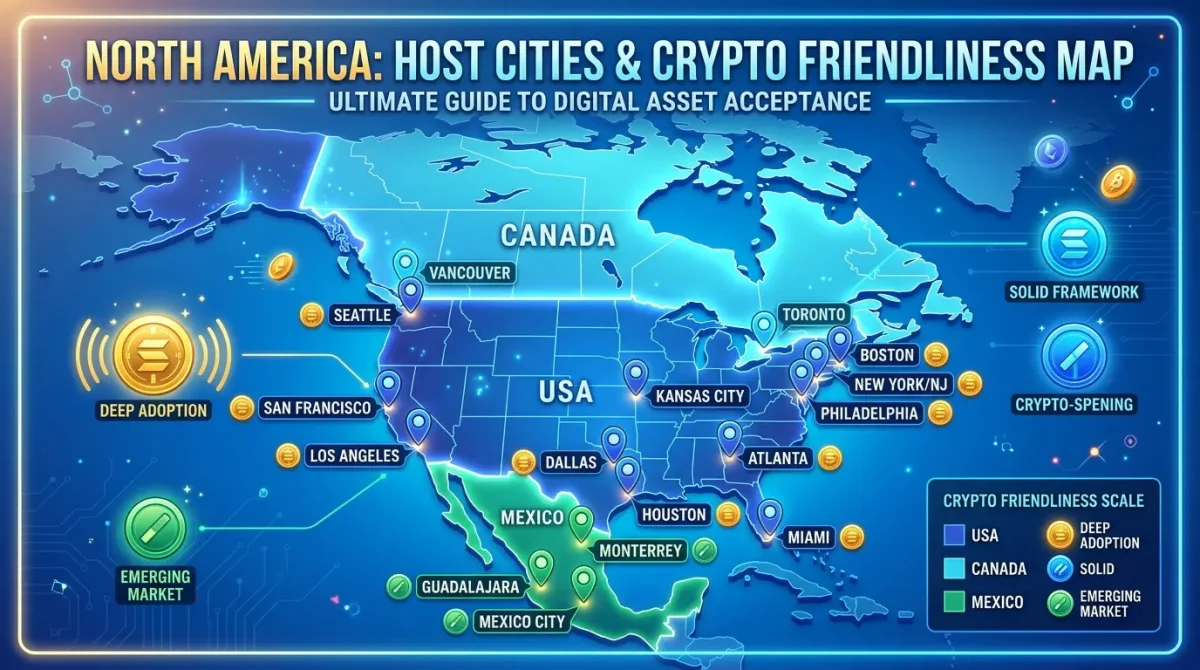
Do not land at SoFi Stadium and start researching cards. Set this up at home, fund it, and run a test transaction.
The 2026 crypto card market is crowded, so here is the honest landscape based on what actually hits your statement:
- Coinbase Visa Debit: A strong default for US-based fans. No monthly fee, zero fees when you spend USDC, and rotating crypto rewards up to 4% in the US. Best suited to the stablecoin-spending strategy that minimizes tax events.
- Crypto.com Visa: The travel-friendly pick. Mid-market FX rates, airport lounge access at higher tiers, and streaming rebates. The catch is you stake CRO to unlock the best perks, with a lock-up period.
- Bybit Card: Zero annual fee, true auto-convert from your spot wallet, no staking required. Worth noting that Bybit is headquartered in Dubai and is one of the most heavily UAE-regulated exchanges on this list, holding both VARA authorization and a full SCA (now CMA) Virtual Asset Platform Operator License.
- Nexo Card: Uses a borrow-against-crypto model in credit mode, so you can spend without selling your position, though you manage the liquidation risk. Notably, Nexo is the Official Regional Digital Asset Partner of Argentina’s national team for this World Cup, so there is a certain poetry to using it at a match.
- Wirex: Competitive for travel thanks to 0% FX in-network on supported spending.
- Kast Card, RedotPay, Bitget Wallet Card: Stablecoin-native options with broad country coverage and multi-chain USDC/USDT funding. Useful for international fans whose home country is not well served by the US-centric cards.
Whichever you choose, complete KYC early. The single most common travel horror story is a card getting frozen for an extra identity check at the worst possible moment, like the turnstile.
A bonus development worth knowing: Visa, working with Bridge and Stripe, expanded stablecoin-funded cards to more than 100 countries in 2026, letting users spend stablecoins directly at over 175 million merchant locations. Wallets like Phantom and MetaMask have integrated these rails. The infrastructure underneath your tap-to-pay has quietly become very good.
Step Two: Hold Stablecoins, Not a Rollercoaster
This is the most important practical decision you will make, and it has two separate benefits.
Volatility. If you fund your trip with Bitcoin or Ether and the market drops 15% during the group stage, your beer budget just shrank with it. If you fund it with USDC or USDT, a dollar is a dollar on matchday one and matchday thirty. For a one-month trip, you want predictability, not exposure.
Tax. Here is the part most fans miss until April. In most countries, spending crypto is a disposal, which means a potential capital gain or loss every single time you tap. Spend appreciated Bitcoin on a $6 churro and you have technically triggered a taxable event on that churro. Spend a dollar-pegged stablecoin and your gain is effectively zero, because the asset did not appreciate against the dollar. Stablecoins turn a tax-reporting nightmare into a non-event.
The smart traveler’s move: convert to USDC or USDT before the trip, keep a clean record of when you did it, and spend the stablecoin. Your future self, filing taxes, will thank you.
Step Three: Know the Three Countries Are Not the Same
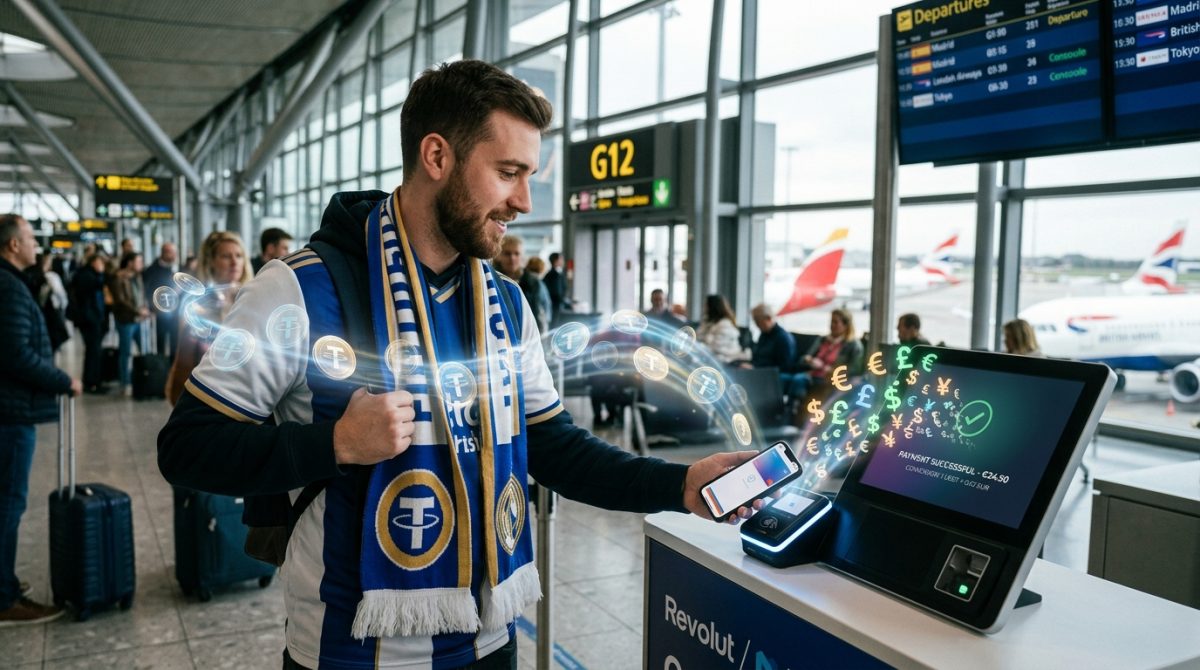
Sixteen host cities, three countries, three different crypto realities.
United States (11 host cities: Atlanta, Boston, Dallas, Houston, Kansas City, Los Angeles, Miami, New York/New Jersey, Philadelphia, San Francisco Bay Area, Seattle). The US hosts the bulk of the tournament, including most knockout matches, and has the deepest crypto-spending environment of the three. Card acceptance is universal. Direct crypto acceptance is meaningful and growing, especially in crypto-forward cities like Miami, Los Angeles, and New York. Bitcoin ATMs are widespread if you need to off-ramp to cash. Expect the smoothest crypto-spending experience here.
Canada (2 host cities: Toronto, BMO Field; Vancouver, BC Place). A mature, well-regulated market with crypto-friendly merchants, broad card acceptance, and plenty of Bitcoin ATMs in both cities. Vancouver in particular has a long history of crypto adoption. Your card will work everywhere fiat cards do.
Mexico (3 host cities: Mexico City, Estadio Azteca; Monterrey, Estadio BBVA; Guadalajara, Estadio Akron). Mexico is more cash-reliant once you step outside major commercial zones, hotels, and chains. Crypto is not legal tender, and acceptance is concentrated in larger businesses and tourist-facing venues. Your crypto card will still work anywhere Visa or Mastercard is taken, which is most formal businesses, but carry some pesos for taxis, markets, and the small vendors who make a Mexican matchday unforgettable. Mexico City in particular is hosting the tournament’s opening match and is a genuine global city, so card infrastructure is strong there.
Universal tip across all three: a crypto card spends fine, but always have a small fiat cash buffer for the places that run on it.
Step Four: The Fees Nobody Puts on the Billboard
Crypto cards are convenient, but they are not free. The costs that quietly eat your spending:
- FX fees. Spending a USD-funded card in Mexico or Canada can trigger a foreign exchange markup, often around 2% to 3% depending on the card. Cards like Wirex advertise 0% in-network FX; Crypto.com offers mid-market rates. Coinbase’s roughly 3% FX on cross-border swipes is fine for US spending but adds up in Monterrey.
- ATM withdrawal fees. Pulling local cash from a crypto card can carry both a provider fee and the local ATM operator fee. Know your card’s monthly free-withdrawal limit before you rely on it.
- Conversion spreads. Even “no fee” cards may build a small spread into the crypto-to-fiat conversion. Read the fine print for your specific card.
- Pre-authorization holds. Hotels and car rentals place holds that can tie up more of your balance than the final charge. Keep a buffer.
None of these is a dealbreaker. They are just the difference between a fan who planned and a fan who got surprised at the worst exchange rate of the trip.
Step Five: The Tax Conversation Nobody Wants but Everyone Needs
Let us be clear and careful, because this is where fans get caught.
In the United States, the IRS treats crypto as property. Selling, swapping, or spending it is a taxable disposal, with short-term gains taxed at ordinary income rates and long-term gains at preferential rates. From 2026, brokers report certain transactions to the IRS on the new Form 1099-DA. Using a crypto card that converts crypto to fiat at checkout counts as a disposal, and each purchase is a separate event.
In Canada, the CRA treats crypto similarly. Spending it is a disposition measured in Canadian dollars, and only 50% of a capital gain is taxable, added to your income for the year.
In Mexico, crypto is not legal tender and is not issued or backed by the central bank, and tax treatment for disposals applies under Mexican law. The rules are less settled than in the US or Canada, which is all the more reason to keep records and get local advice if you are spending significant sums.
Now, the nuance that matters for a traveling fan: these capital-gains rules generally bite in your country of tax residence, not the country you are visiting for a month. A tourist is not filing a US return because they bought a hot dog with a crypto card in Dallas. But the disposal still happened, and your home tax authority may care about it. Two takeaways:
- Spend stablecoins. Near-zero gain means near-zero tax headache, wherever you are tax-resident.
- Keep records. Note what you funded, when, and at what value. A simple spreadsheet beats a frantic reconstruction next spring.
This is general information, not tax advice. If you are moving real money, talk to a professional in your home jurisdiction.
The UAE Fan’s Quiet Advantage
Here is where geography turns into an edge.
A fan flying in from Dubai or Abu Dhabi is, on paper, the best-positioned crypto spender at the entire World Cup. The UAE imposes 0% personal income tax and 0% capital gains tax on individuals’ crypto. That means a UAE-resident fan disposing of crypto to spend it abroad faces no personal capital gains tax at home on the disposal. The tax friction that complicates an American or Canadian fan’s matchday churro simply does not exist for them.
This is not an accident. It is the downstream effect of the UAE deliberately building one of the world’s most complete crypto environments. By 2026, the country runs a layered regulatory system: Dubai’s VARA, Abu Dhabi’s FSRA in ADGM, the DFSA in DIFC, the federal Capital Market Authority, and the Central Bank for payment tokens. VARA’s Travel Rule has been fully effective since February 2026, dirham-backed stablecoin rails are live, and exchanges like Bybit are licensed at both the Dubai and federal levels.
The practical upshot for a UAE-based fan: you have likely been spending crypto comfortably at home for a while, your exchange is probably properly licensed, and you carry none of the capital-gains baggage abroad. You are, in the most literal sense, match-fit for crypto travel.
For everyone else, the UAE model is worth noticing for a different reason. It is the clearest example of what a mature, crypto-spending-friendly jurisdiction looks like, and it is the environment that produces the licensed, reliable exchanges and cards the rest of the world increasingly depends on when traveling.
What You Cannot Pay for in Crypto
A quick expectation-reset so you are not caught out:
- Official FIFA tickets and hospitality. No crypto exchange is an official 2026 World Cup sponsor, and FIFA’s official ticketing and hospitality channels run on fiat and traditional cards. Buy through official channels with a card; do not chase crypto-only ticket “deals,” which are a classic scam vector.
- Most stadium concessions. Inside venues, expect contactless fiat card and mobile-wallet payments. Your crypto card works here precisely because it rides the Visa or Mastercard rails, not because the stadium “accepts crypto.”
- Some hotels and car rentals at the counter. They take your card fine, but the pre-auth holds mentioned earlier apply.
The rule of thumb: your crypto card works anywhere a normal card works. Pure on-chain crypto acceptance is a nice surprise, never a travel plan.
Security on the Road
A few non-negotiables when you are spending crypto in an unfamiliar city:
- Use a dedicated spending wallet or card balance, not your main holdings. Fund what you need for the week. Keep the rest in cold storage or a separate account.
- Beware public WiFi for any wallet or exchange access. Use mobile data or a trusted VPN.
- Ignore “crypto World Cup giveaway” links and QR codes. Tournament season is scam season. Official giveaways, like the legitimate ticket promotions some sponsors run, live on official channels only.
- Enable every layer of authentication your card app offers, and set transaction alerts so you see any unexpected charge instantly.
- Have a backup. One crypto card, one traditional card, and a little cash. Redundancy is what separates a minor hiccup from a ruined matchday.
- Always choose local currency: When a terminal abroad asks whether you want to pay in your home currency or the local currency. This avoids dynamic currency conversion (DCC), where the merchant’s payment system applies its own inflated exchange rate on top of any card FX fee. Paying in USD in Mexico City or in your home currency in Toronto can quietly cost several percent more. Tap in pesos, in Canadian dollars, in US dollars, whichever is local to where you are standing.
World Cup Crypto
The 2026 World Cup is the first genuinely crypto-ready World Cup, not because FIFA embraced it (it did not), but because the infrastructure underneath everyday spending finally caught up. A well-chosen card, a stablecoin balance, a little awareness of fees and tax, and a small cash buffer will let you move through sixteen host cities across three countries spending digital money as easily as a local spends a debit card.
The fans with the smoothest ride will be the ones who set up before they flew, chose stablecoins over volatility, and understood that their crypto card works because of card rails, not stadium goodwill. And the fans with the very smoothest ride of all will be the ones flying in from the UAE, carrying zero capital-gains baggage and a few years of practice spending crypto in one of the world’s most crypto-ready economies.
Wherever you are coming from, set it up right, spend it smart, and keep your eyes on the football.
If you are a business in the UAE or wider region thinking about how to accept crypto payments, issue cards, or build compliant digital asset products for a globally mobile customer base, talk to the Tokenova team. We help companies structure and license in the UAE so the spending experience is as solid as the technology behind it.
Frequently Asked Questions
Q: Can I actually pay for things with crypto at the 2026 World Cup?
Yes, primarily through a crypto debit or credit card that converts your balance to local currency at the point of sale over the Visa or Mastercard networks. That makes your crypto spendable anywhere cards are accepted across the US, Canada, and Mexico. Direct on-chain merchant acceptance also exists, especially in the US, but is less consistent.
Q: Which crypto should I use for spending on the trip?
Stablecoins like USDC or USDT are generally the most practical for travel because they hold a stable dollar value and minimize the tax complications of spending appreciated crypto. Holding volatile assets like Bitcoin for a month of spending exposes your budget to price swings.
Q: Do I owe tax for spending crypto while traveling?
In most countries, spending crypto is a taxable disposal. These rules typically apply in your country of tax residence rather than the country you are visiting. Spending stablecoins reduces the gain to near zero. UAE residents face 0% personal capital gains tax. Keep records and consult a tax professional for your situation. This article is not tax advice.
Q: Is Mexico crypto-friendly for tourists?
Your crypto card will work anywhere Visa or Mastercard is accepted, which covers most formal businesses, hotels, and chains in Mexico City, Guadalajara, and Monterrey. However, Mexico is more cash-reliant outside major commercial areas, and crypto is not legal tender, so carry some pesos for smaller vendors and taxis.
Q: Can I buy World Cup tickets with crypto?
Official FIFA tickets are sold through official channels on fiat and traditional cards. No crypto exchange is an official 2026 sponsor. Be very cautious of any offer to buy tickets with crypto outside official channels, as this is a common scam.
Q: Why are UAE fans better positioned for crypto spending?
The UAE imposes no personal income or capital gains tax on individuals’ crypto, so a UAE-resident fan faces no personal capital gains tax at home when disposing of crypto to spend abroad. The UAE also has a mature, well-regulated crypto environment, meaning UAE fans typically already use licensed exchanges and cards.
Q: What fees should I watch out for?
Foreign exchange markups (often 2% to 3% on cross-border spending), ATM withdrawal fees, conversion spreads even on “no fee” cards, and pre-authorization holds from hotels and car rentals. Compare your specific card’s fee schedule before you travel.