
The UAE is now a global leader in asset tokenization thanks to forward-thinking policy and infrastructure. Agencies like Dubai’s Land Department are putting titles on a blockchain, while financial regulators (VARA, ADGM, DIFC/DFSA) license digital securities and funds. This blend of land registry data and financial regulation is forming a powerful new asset ecosystem, bridging the gap between concrete and code.
Regulatory & Market Landscape

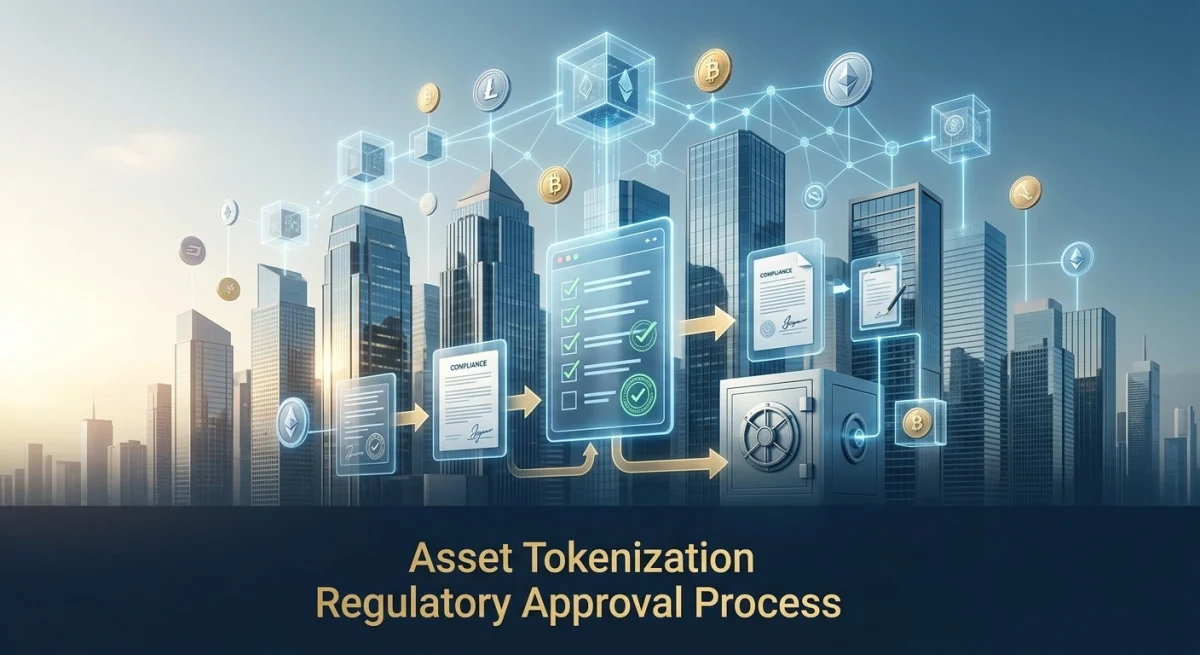
The UAE has built clear rules for tokenized assets. Dubai’s VARA created an “Asset-Referenced Virtual Asset” class to license asset-backed tokens (e.g. property shares, fund units). Abu Dhabi’s ADGM likewise has a full digital asset framework: its FSRA now explicitly licenses and supervises tokenized funds and securities. In practice, this means any token issuer needs a proper license, audited backing assets, and ongoing disclosures, just like a traditional security. Retail and institutional investors alike now operate under clear rules, instilling confidence that each digital token is fully backed and compliant.
The Tokenization Stack: Layers from Asset to App
UAE tokenization can be visualized as an 8-layer stack spanning from physical asset data up to user applications. At the bottom is the Physical Asset Layer: official references to real-world properties and contracts (DLD land titles, Ejari leases, approved building permits, utility accounts) encoded on-chain. Above that is Identity/Verification: UAE Pass, Emirates ID, and banking data link each wallet to a real UAE person. Next is the Smart Contract/Legal layer: UAE property laws, escrow rules, and rental regulations are written into code to enforce transactions. Above these sit the Blockchain & Protocol layer (public chains like Ethereum/Palm and enterprise chains like Corda with compliance modules) and then the Token Standards (security tokens, compliance-friendly tokens, NFTs for deeds). On top are Secondary Markets (licensed exchanges, OTC desks) and finally the Interface layer (mobile investor apps, portals, and dashboards).
Tokenization Layers (simplified):
- Physical Assets: DLD/RERA property titles, Ejari tenancy contracts, building permits, and utility records on-chain.
- Identity: UAE Pass / Emirates ID integration with crypto wallets for KYC.
- Smart Contracts: UAE property laws, escrow conditions, and approvals encoded on-chain.
- Blockchain Protocols: Underlying networks (Ethereum, Palm Network, Corda, etc.) with built-in compliance features.
- Secondary Markets: Licensed digital exchanges and trading platforms (VARA or ADGM regulated) for token trading.
- User Interface: Investor dashboards, mobile apps, and data feeds (prices, analytics).
From Land Registries to On-Chain Funds

This full-stack approach covers both real estate and financial assets. On the land side, Dubai’s Land Department (DLD) has led pilots. In May 2025, DLD announced the launch of the MENA region’s first tokenized real estate project via the Prypco Mint platform. In that project, a Dubai property is split into digital shares, letting multiple investors own pieces of the building. Beyond titles, DLD is also exploring blockchain-based Ejari tenancy registration and integrating its databases (e.g. utilities) on-chain, further automating property workflows.
On the finance side, UAE institutions are issuing tokenized funds. For example, in 2025, Qatar National Bank and fintech firm DMZ Finance launched QCDT, the DIFC’s first regulated tokenized money-market fund. This fund is managed by Capricorn Fund Managers (DIFC) and custodied by Standard Chartered (and even used as collateral on some crypto exchanges). Also in late 2025, Laser Digital (Nomura’s digital arm) won VARA approval to tokenize its Laser Carry Fund, the region’s first institutional carry-trade fund on-chain. These initiatives mean a single digital wallet in the UAE could soon hold both Dubai property tokens and regulated fund tokens, fully backed and compliant.
Case Studies & Market Impact
Real projects show these trends in action. In 2025, the Alternative Dubai Development (ADD) platform tokenized the St. Regis Downtown Dubai hotel. It issued 8.5 million tokens at AED100 each (for an AED850M asset). About 45% of tokens went to UAE retail investors, 30% to local institutions, 15% to other GCC buyers, and 10% to international holders. Another project by Liquefy tokenized 87 apartments in Emaar Beachfront into 4.2M tokens (symbol EBF-V1) worth AED420M, reflecting strong investor interest in fractional real estate.
On the fund side, QCDT serves as a template: it uses blockchain issuance, transparent on-chain accounting, and regulated custody to deliver real returns via tokens. Laser Digital’s carry fund will similarly allow investors to trade complex strategies on-chain under full compliance. Other UAE players are entering the space, too. For instance, UAE financial centers now recognize major stablecoins (USDC/EURC) for settlement, making dollar payments digital. In short, the UAE’s on-chain market is a rare example of a complete stack: all the infrastructure (blockchain networks, UAE Pass, licensed exchanges) and regulations (VARA, ADGM, SCA rules) are in place so projects can launch rapidly.
Bridging Bricks & Blockchain
The UAE is literally bridging bricks and blockchain. With clear laws and live pilots, what once was futuristic is now real: property titles on a ledger and fund shares as tokens. For Web3 enthusiasts in the Emirates, the message is clear: real-world ownership is going digital. Imagine buying a fraction of the Burj Khalifa or investing in a UAE-regulated fund with just a few taps on your phone. The UAE’s approach unites its iconic infrastructure with blockchain innovation, setting the stage for a fully digitized economy of assets.
FAQ
Q: What is asset tokenization in the UAE?
A: Asset tokenization means creating blockchain-based tokens that each represent a share of a real asset (like property or a fund) in the UAE. For example, a building’s title can be divided into thousands of tokens, each one backed by that property. These tokens are fully regulated: Dubai’s VARA and Abu Dhabi’s ADGM treat them like securities. Investors trade them on licensed platforms, benefiting from blockchain transparency (all transactions recorded) and compliance safeguards.
Q: How is the Dubai Land Department using blockchain for land titles?
A: The Dubai Land Department (DLD) is pioneering blockchain for property records. In 2025 it partnered with Prypco Mint to tokenize a Dubai property – the first such project in MENA. This means the official title data is put on a blockchain, allowing fractional ownership tokens to be issued. DLD is also exploring blockchain-based Ejari (tenancy) registration. This gives titles extra security (immutable proof) and automates many steps, making transactions nearly instant and transparent.
Q: Who regulates tokenized assets in the UAE?
A: Different bodies oversee different parts. Dubai’s Virtual Assets Regulatory Authority (VARA) regulates virtual assets in Dubai and created the ARVA rules for asset tokens. Abu Dhabi’s FSRA (ADGM) regulates tokenized funds and securities under English common law. The DIFC/DFSA also has digital asset rules. Federally, the Securities & Commodities Authority (SCA) and Central Bank cover broader crypto guidelines (e.g. stablecoins). Together, these authorities ensure each token offering follows licensing, disclosure, custody and investor protection rules.
Q: Can I invest in these on-chain assets?
A: Yes, via regulated platforms. In practice, tokenized real estate or funds in the UAE are offered to qualified investors through licensed issuers. Retail investors can participate under set limits and after KYC. For example, the St. Regis Dubai token sale was available to UAE retail buyers and institutions. Fund tokens like Laser Digital’s carry fund are offered to professional investors under VARA rules. All sales require approvals, so you would buy tokens through authorized portals or exchanges (and usually pay in approved stablecoins). Because they’re regulated products, investors get legal protections and audited assets.
Q: What benefits does tokenization bring to real estate and funds?
A: Tokenization enables fractional ownership and liquidity. It lets small investors buy tiny shares of expensive assets. It also automates and speeds up transactions: no paper deeds or long bank transfers are needed. Blockchain’s transparency (immutable ledgers) means ownership and history are clear to all. Smart contracts can automatically distribute rent or dividend payments to token holders. Major firms like BlackRock are using tokens for similar gains globally. In the UAE, these benefits come with strong regulatory oversight, so investors get efficiency without sacrificing protection.